Last updated October 30, 2026
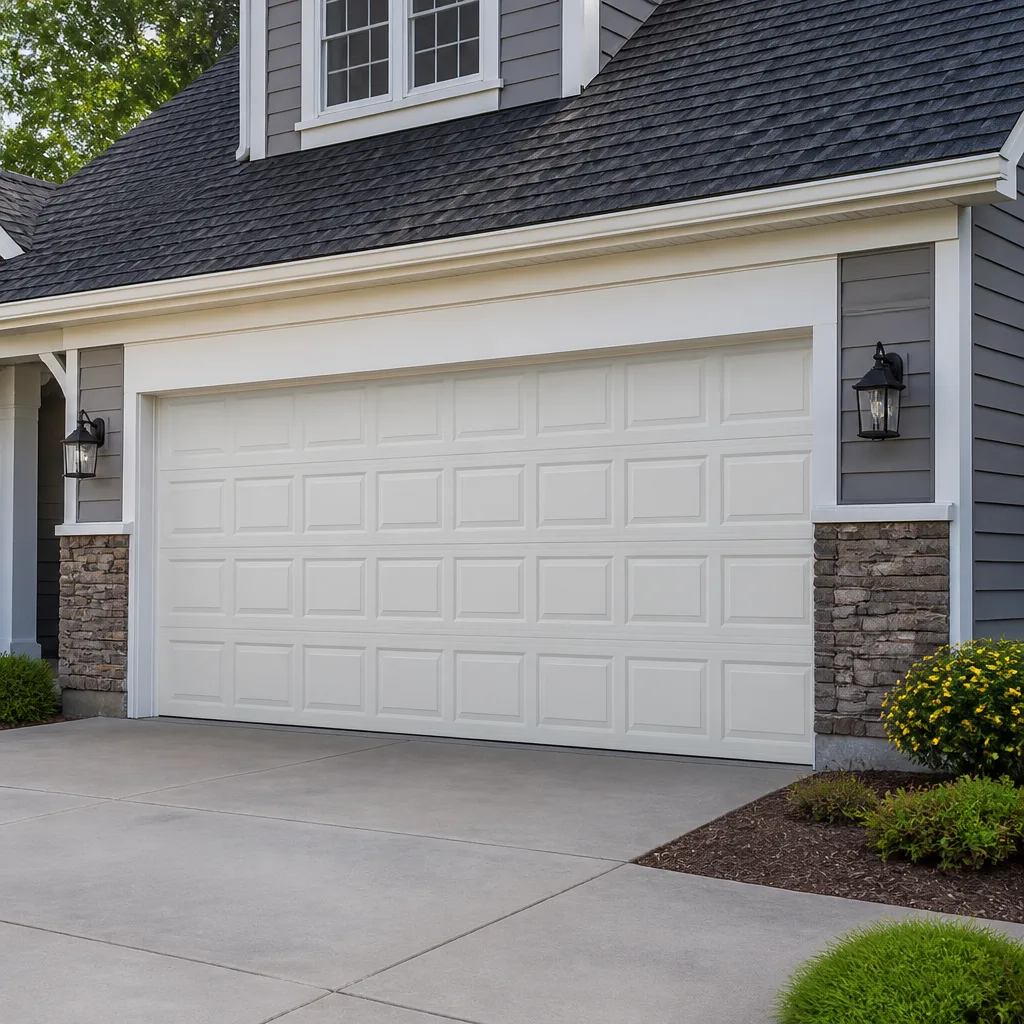 Raised-panel steel
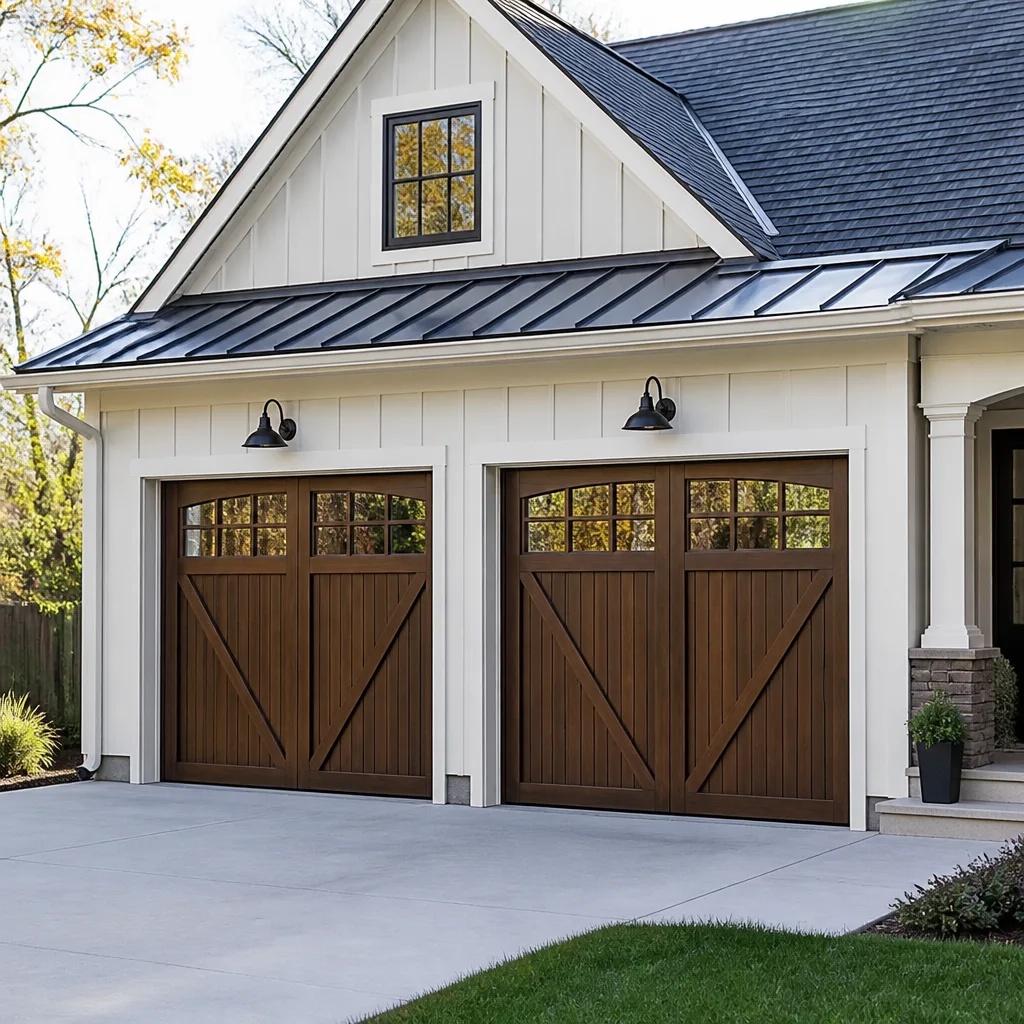 Carriage house
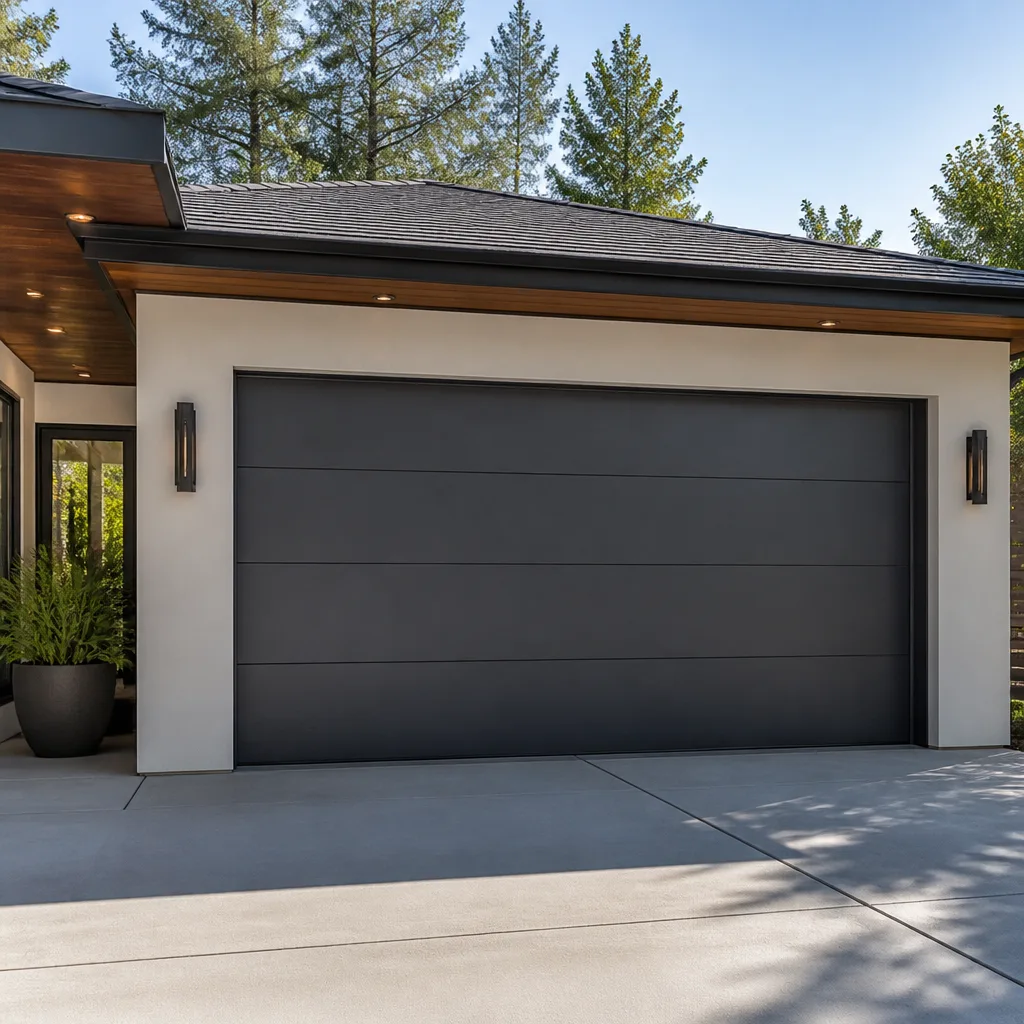 Modern flush
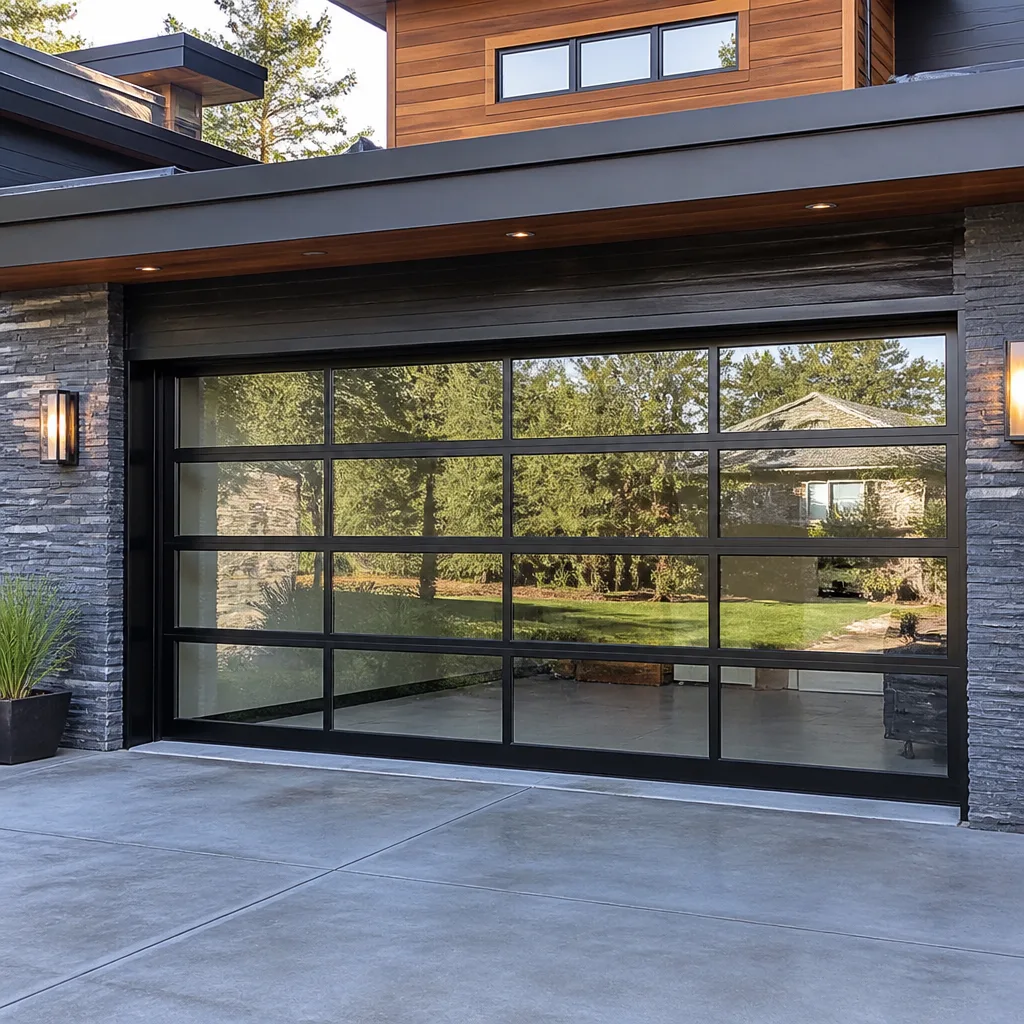 Full-view glass
 LiftMaster openers
 Chamberlain openers
Full 25-point door and opener safety check with every visit - springs, cables, rollers, tracks, and your LiftMaster or Chamberlain opener included
You get a price before we start. It does not change when the truck arrives.
Get your free estimateThe Complete Garage Door Repair Guide for Hollywood Homeowners
A torsion spring rated for 10,000 cycles in a Chicago garage may last half that lifespan in Hollywood’s coastal humidity, yet most homeowners don’t find out until it snaps without warning on a Tuesday morning. That’s the reality of garage door ownership in South Florida, and it’s why the standard national repair advice rarely tells the whole story. This guide covers what actually happens to garage doors in Hollywood, from salt-air corrosion on cables to the specific permit rules Broward County enforces, so you can make repair decisions with a clear picture of the costs, timelines, and trade-offs involved. For The Complete Guide to Garage Door in Hollywood, see our dedicated resource.
Quick Answer
Garage door repair in Hollywood, FL typically costs between $150 and $650 depending on the component, with spring replacement running $180 to $340 and opener motor replacement ranging from $250 to $500. Most repairs are completed same-day when parts are in stock, and the biggest factor separating a durable fix from a recurring problem is whether the technician accounts for Hollywood’s salt air, humidity, and heat when selecting and installing parts. For an exact quote on our Garage Door Repair services, call Benchmark Garage Door Repair at (833) 589-8332.
Styles & brands we work with
Table of Contents
- Why Hollywood’s Climate Ages Garage Doors Faster
- Component-by-Component Lifespans in Hollywood
- DIY-Safe Repairs vs. Jobs That Need a Pro
- Hurricane-Rated Doors and Wind-Load Certification
- Broward County Permits: Repair vs. Replacement
- What Garage Door Repairs Cost in Hollywood
- Working With What’s Already Installed
- Common Mistakes to Avoid
- When to Call a Professional
- Frequently Asked Questions
Why Hollywood’s Climate Ages Garage Doors Faster
Hollywood sits between the Atlantic Ocean and the Everglades, which means garage door hardware gets hit from two directions: salt-laden ocean air pushing inland from the east, and high-humidity air sitting over the city during the long wet season. Neither shows up in a national repair manual. Salt air accelerates oxidation on exposed metal components. Galvanized steel cables that might last seven years in Orlando can show rust pitting in four to five years within a mile or two of Hollywood Beach. The same applies to springs, hinges, and the bottom brackets that hold the lift cables.
Humidity works more slowly but just as steadily. When a garage door opens during a rainstorm or even on a muggy morning, moist air enters the garage and condenses on cooler metal surfaces. Rollers develop surface rust that eats at the bearings. Opener circuit boards, especially in units mounted near the ceiling, absorb moisture over time and develop electrical faults that mimic mechanical failures. In our experience, we’ve seen Hollywood homeowners replace an entire opener when the real culprit was a corroded connection on the logic board, a $40 fix on many LiftMaster and Chamberlain models.
Heat is the third factor. Pavement and driveway surfaces in Hollywood can exceed 140 degrees on summer afternoons. That heat radiates into the garage and raises the ambient temperature around the door’s steel panels and hardware. Heat-expanded metal changes the geometry of a door slightly. Tracks that were square in January may bind in August if they weren’t installed with South Florida expansion tolerances in mind. Older doors, particularly pre-2000 models common in established Hollywood neighborhoods like Emerald Hills and Hollywood Lakes, were often installed without those tolerances. Technicians who work in South Florida learn to diagnose binding not as a track problem but as a heat problem. It changes the fix.
For a deeper look at how these environmental factors play out in actual service calls, see our Garage Door Repair in Hollywood page.
Component-by-Component Lifespans in Hollywood
The table below reflects what we actually see in Hollywood, not what a manufacturer’s national chart predicts. These numbers assume a door that’s used twice daily, receives basic lubrication once or twice a year, and sits in a typical Hollywood garage: uninsulated block construction, elevated humidity, and salt exposure varying by distance from the beach. Homes within about two miles of the ocean, from Hollywood Beach through downtown, consistently show faster degradation than properties west of I-95 near the Turnpike.
| Component | National Average Lifespan | Hollywood-Area Lifespan | What Shortens It Here |
|---|---|---|---|
| Torsion springs | 7-10 years | 5-7 years | Humidity accelerates metal fatigue; salt air causes micro-pitting |
| Extension springs | 6-8 years | 4-6 years | Rust on exposed coils; frequent cycling in humid air |
| Lift cables | 8-12 years | 5-8 years | Salt-air corrosion on galvanized strands |
| Bottom brackets | 10-15 years | 6-9 years | Rust-through on coastal properties; stress from heat expansion |
| Rollers (steel) | 5-7 years | 3-5 years | Humidity rusts bearings; salt air accelerates wear |
| Rollers (nylon) | 10-12 years | 7-10 years | Heat softens nylon over repeated summers |
| Opener motor | 10-15 years | 8-12 years | Heat and humidity stress circuit boards |
| Weather seal | 2-4 years | 2-3 years | UV exposure and salt air degrade rubber faster |
The pattern is consistent: Hollywood cuts roughly 20 to 30 percent off the national lifespan of most metal components. That doesn’t mean you need to replace everything on a shorter schedule. It means inspection should be more frequent. A visual check every three months catches a rusted cable or a cracking weather seal before it becomes a mid-cycle failure. A torsion spring that’s lost its black coating and shows orange surface rust is a candidate for replacement even if it hasn’t snapped, particularly on doors that see heavy use.
DIY-Safe Repairs vs. Jobs That Need a Pro
Some garage door maintenance is genuinely safe for a Hollywood homeowner with basic tools and a step stool. Other jobs are more dangerous in Florida than they are in drier climates because heat-expanded metal and rusted components behave unpredictably under tension. For help deciding, read our DIY vs Professional Garage Door: The Hollywood Homeowner’s Decision Guide. Here’s the split, based on what we see in Hollywood service calls.
Safe to Handle Yourself
- Lubricating rollers, hinges, and springs. Use a silicone-based lubricant, not WD-40. Spray the roller bearings, the hinge pins, and a light coat on the torsion spring. In Hollywood’s humidity, every three to four months is realistic. This single habit extends component life noticeably and is the most cost-effective maintenance there is.
- Cleaning and aligning photo-eye sensors. When the door reverses for no reason, the sensors are the first suspect. Wipe the lenses with a dry cloth. Check that both lights are solid, not blinking. Adjust the mounting brackets if they’ve been bumped. This eliminates about a third of all “opener won’t close” calls without a service visit.
- Replacing the bottom weather seal. The rubber strip at the bottom of the door deteriorates in Hollywood’s sun and salt air faster than anywhere else on the door. Replacement strips run $15 to $30 at any hardware store. Slide out the old seal, slide in the new one. On most doors it takes ten minutes and a pair of scissors.
- Tightening visible hardware. Vibration from daily cycling loosens bolts and brackets over time. A socket set and ten minutes every few months prevents the kind of racking and misalignment that turns into a bigger repair.
Leave to a Professional
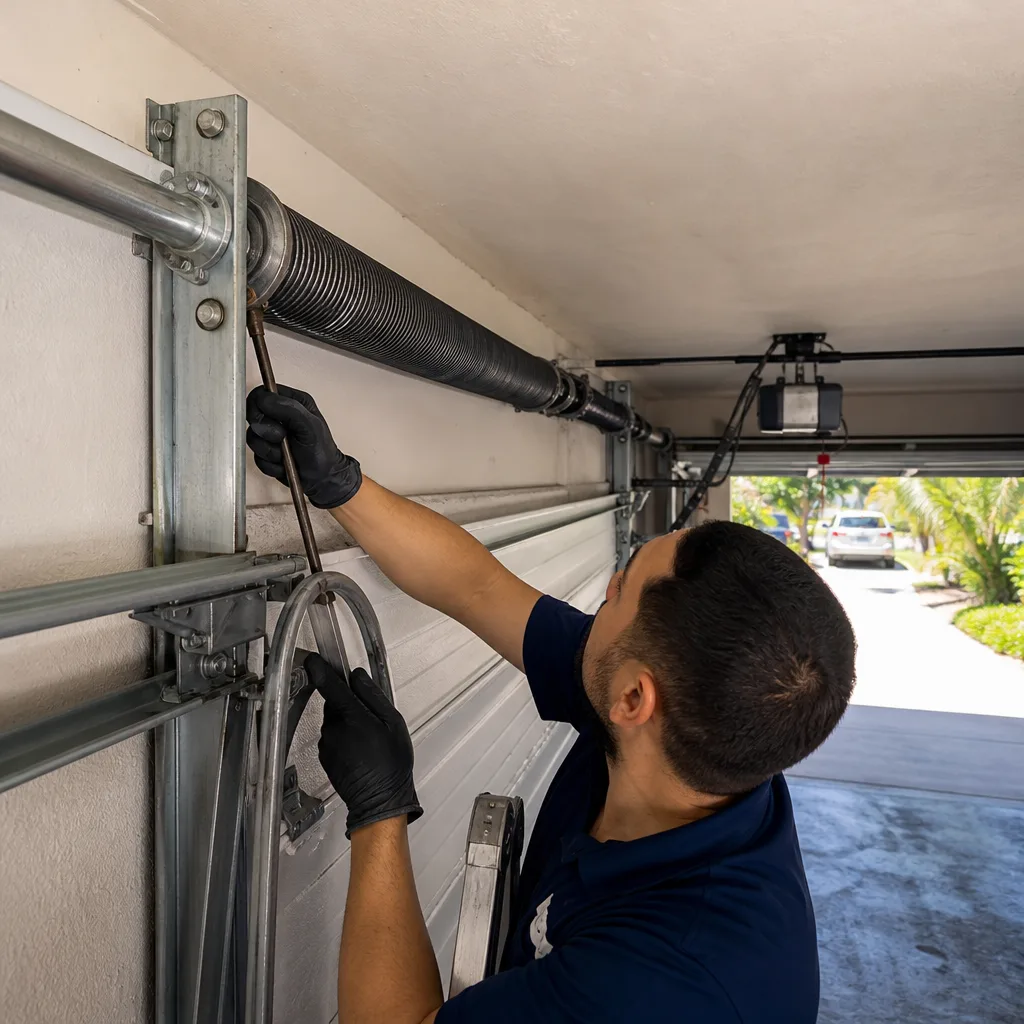
- Torsion spring replacement. This is the single most dangerous repair on any garage door, and it’s more dangerous in Hollywood where heat expansion adds a variable that national guides don’t address. A torsion spring under tension stores enough energy to cause severe injury or worse. Professionals use specific winding bars and follow a measured procedure. This is not a DIY job under any circumstances.
- Cable replacement. Lift cables on Hollywood doors near the coast often fail from corrosion rather than clean breakage. A rusted cable doesn’t snap cleanly; it frays and lets go unpredictably. Since the cable works in tandem with the spring under tension, replacing it requires releasing that tension safely.
- Track realignment. On a hot Hollywood afternoon, heat-expanded metal can pull tracks slightly out of square. Forcing a door along a misaligned track stresses the rollers, brackets, and opener motor. Realigning tracks requires releasing opener force, loosening mounting brackets, and re-squaring everything to the door’s actual travel path.
- Opener motor or logic board repair on newer units. Modern openers from LiftMaster, Chamberlain, and Genie integrate security features, smart-home connectivity, and battery backup systems. Diagnosing a logic board fault versus a motor fault versus a wiring issue requires specific testing equipment and brand knowledge. The diagnostic process matters more than the part replacement.
If you’re dealing with an opener issue specifically, our Garage Door Opener Repair in Hollywood page covers the common symptoms and what they mean.
Hurricane-Rated Doors and Wind-Load Certification
A meaningful number of Hollywood homes, particularly those built or renovated after 2002, have garage doors rated for hurricane wind loads under Florida Building Code. These doors aren’t just heavier versions of standard doors; they’re engineered systems where the door, the tracks, the fasteners, and the bracing all work together to resist specific pressure ratings. When a repair on a hurricane-rated door uses a non-rated part, the wind-load certification is voided. The door still opens and closes. It just no longer meets the code it was installed under.
This matters for three reasons. First, your insurance policy may require a certified wind-rated door as part of your wind mitigation credits. If a repair voids that rating and you file a claim after a storm, the adjuster can flag the door as non-compliant. Second, Hollywood’s building department expects repair work on rated doors to maintain the rating. Third, the hardware itself is different. Hurricane-rated doors typically use heavier gauge tracks, reinforced struts, and fasteners spaced on a tighter pattern than standard residential doors.
What does a rating-conscious repair look like in practice? If a torsion spring on an Amarr or Clopay hurricane-rated door needs replacement, the spring itself doesn’t impact wind load, but the technician should still use a spring matched to the door’s weight and cycle rating. If a track or hinge needs replacement, the parts need to match the original manufacturer’s wind-rated specifications. Installing a generic big-box hinge on a wind-rated Wayne Dalton door might physically fit and still void the certification. This is where brand-specific knowledge stops being a marketing claim and becomes a functional requirement.
Replacement is a different conversation from repair. A hurricane-rated door that’s reached the end of its service life should be replaced with a door that meets current code for its wind zone. Our Garage Door Installation in Hollywood page walks through what’s involved and why sourcing from professional manufacturers matters.
Broward County Permits: Repair vs. Replacement
Broward County draws a fairly clear line between garage door repair and garage door replacement for permitting purposes, and Hollywood follows that line. Understanding where the line sits can save you from an expensive surprise.
Repairs don’t require a permit. Spring replacement, cable replacement, roller replacement, track adjustment, opener repair, sensor replacement, weather seal replacement, hinge replacement, and panel repair all fall under ordinary maintenance. You don’t need to pull a permit for any of these, and no inspection is required after the work is done.
Replacement requires a permit. When the entire door assembly comes out and a new door goes in, Broward County requires a building permit. The permit application includes the new door’s wind-load rating, product approval documentation, and installation details. After installation, an inspection verifies the door meets the Florida Building Code for its wind zone. Hollywood’s building department enforces this consistently, and working with an installer who handles the permit filing as part of the job eliminates the paperwork burden.
The gray area: at what point does a repair legally become a replacement? The practical answer in Hollywood is that if the door’s structural sections, tracks, and mounting system are all being swapped out, that’s a replacement regardless of how it’s billed. If you’re replacing springs, cables, and rollers on an existing door, that’s a repair. If the door itself is being removed and a new door installed, even if the opener stays, that’s a replacement with all the permit requirements attached.
Homeowners sometimes ask if they can skip the permit on a replacement to save money. The risk shows up later: at resale, during an insurance claim, or if an inspector flags the unpermitted work during an unrelated project. The permit cost is minor compared to the liability of an unpermitted door on a Hollywood home.
What Garage Door Repairs Cost in Hollywood
Prices in Hollywood run slightly above the national average, partly because of South Florida labor rates and partly because corrosion-resistant and hurricane-rated parts cost more than generic hardware. The table below gives you a realistic range for the most common repairs, based on what we quote in Hollywood and surrounding Broward County neighborhoods, including Hollywood Lakes, Emerald Hills, and the 33019 through 33024 zip codes.
| Repair | Typical Hollywood Price Range | Notes |
|---|---|---|
| Torsion spring replacement (single) | $180 – $280 | Price varies by door weight and spring cycle rating |
| Torsion spring replacement (pair) | $280 – $400 | Replacing both springs is standard practice when one fails |
| Cable replacement (per side) | $120 – $180 | Coastal properties may need both sides replaced together |
| Roller replacement (set of 10-12) | $100 – $180 | Nylon rollers run slightly more than steel |
| Opener motor replacement | $250 – $500 | Depends on brand and drive type; Chamberlain and LiftMaster units are widely serviced |
| Track realignment | $90 – $150 | Often combined with other repairs |
| Sensor alignment or replacement | $75 – $120 | Simple fixes, fast turnaround |
| Full diagnostic visit | $50 – $90 | Waived if you proceed with the repair |
The price you’re quoted includes the diagnosis, the parts, and the labor. It’s agreed before the work starts, and it doesn’t change when the technician gets a closer look at the door. If a Hollywood garage door business quotes a job and then revises the number upward after the work begins, that’s a red flag. A competent technician knows what they’re looking at within a few minutes of inspection.
One factor that affects pricing in Hollywood more than in other markets is corrosion. A coil spring on a beach-area home that’s rusted into its bracket takes longer to remove than a clean one. Cables that have frayed into strands require careful extraction. These are legitimate labor considerations, and a good technician will explain them in the estimate rather than springing them on you later.
We service doors from LiftMaster, Chamberlain, Genie, Clopay, and several other major brands, so the estimate you get reflects the equipment already on your home, not a pitch to replace it with something more expensive. For a precise number on your specific door, call (833) 589-8332.
Working With What’s Already Installed
Every garage door and opener combination has its own quirks. A Genie opener from 2012 doesn’t fail the same way a Chamberlain from 2020 does. A Clopay steel door with a rusted bottom panel needs a different repair approach than a wood door in Hollywood Lakes with water damage. This is why brand-agnostic diagnosis matters.
Dealer-tied repair companies are incentivized to recommend replacing whatever’s installed with the brand they carry. If a technician only works on one opener line, every opener problem naturally points toward that line’s replacement product. That’s not diagnosis; that’s sales. A multi-brand approach changes the conversation. When a technician works across LiftMaster, Chamberlain, Genie, and others, the recommendation is based on the actual condition of the unit and the cost to repair it, not on what’s available to sell.
The most common example in Hollywood is an older Genie or Craftsman opener that’s stopped responding. A single-brand technician often recommends a full replacement because that’s the only product they can offer. A brand-agnostic technician evaluates the logic board, the safety sensors, the drive gear, and the remote. In a meaningful percentage of cases, the fix is a $120 board swap on a unit with years of life left. The right fix, not the easiest upsell.
The same logic applies to doors themselves. A rusted bottom bracket on an Amarr door doesn’t justify replacing the whole door unless the panel itself has structural issues. Replacement brackets, new cables, and a service visit cost a fraction of a new installation. When a door has genuinely reached the end of its useful life, the recommendation shifts to replacement, and that’s a conversation our Hollywood repair team handles honestly.
Common Mistakes to Avoid
- Using WD-40 instead of a silicone lubricant. WD-40 is a cleaner and a moisture displacer, not a lubricant for garage door components. It strips existing lubricant and leaves metal surfaces more vulnerable to Hollywood’s humidity. Silicone spray is what rollers, hinges, and springs actually need.
- Replacing only one torsion spring. When one spring on a two-spring door fails, the other is nearing the end of its life. Replacing both at once costs more upfront but avoids a second service call within months and keeps the door operating evenly.
- Ignoring rust on cables and brackets. In Hollywood’s coastal zones, surface rust is a legitimate early-warning sign, not a cosmetic issue. Rusted cables snap. Rusted brackets let go. A visual check every three months catches these problems while they’re still $150 fixes instead of $500 failures.
- Adjusting the force settings on an opener to “fix” a binding door. When a door binds in the summer heat and a homeowner (or a sloppy technician) raises the opener’s force limit so it pushes through, the opener motor burns out faster and the underlying misalignment gets worse. The right fix is to address the source of the binding.
- Replacing a hurricane-rated door with a non-rated door. This voids wind-load certification, impacts insurance credits, and violates Broward County’s permitting requirements. If you’re replacing a hurricane-rated door in Hollywood, the new door needs to meet current code for the same wind zone.
- Skipping the permit on a full replacement. The short-term savings disappear at resale, during insurance claims, or when an inspector catches it. The permit process in Hollywood is straightforward, and a professional installer handles the paperwork.
When to Call a Professional
Call a professional when the repair involves tensioned components like torsion springs and lift cables, when the door binds or scrapes during operation, when the opener behaves erratically despite clean sensors and fresh batteries, or when you suspect water or corrosion damage inside the unit. Any job that requires releasing spring tension, removing cables under load, or working on elevated garage ceiling components is a job for someone who does this work daily.
Benchmark Garage Door Repair offers free estimates in Hollywood, from Hollywood Beach to Emerald Hills and everywhere between I-95 and the Turnpike. If your door is failing and you want a clear diagnosis and a fixed price before any work begins, call (833) 589-8332. Our Benchmark Garage Door Repair home page has more detail on our approach and service area.
Frequently Asked Questions
Spring replacement in Hollywood typically runs $180 to $400 depending on whether you’re replacing one spring or a pair, and on the weight and cycle rating of your door. Hollywood’s coastal environment shortens spring life compared to national averages, so replacing both springs at once is standard practice when one fails. Call (833) 589-8332 for an exact quote on your specific door.
In many cases, yes. Common repairs like spring replacement, cable replacement, roller replacement, and sensor issues are completed in a single visit when parts are in stock. More unusual failures on older or hurricane-rated doors may require a second visit if the specific part isn’t on the truck. Estimate is always given before work starts.
Salt-laden ocean air carries chloride particles that accelerate oxidation on exposed steel components like cables, springs, and brackets. Homes within one to two miles of Hollywood Beach consistently show faster rust than properties west of I-95. More frequent lubrication and visual inspection are the most practical defenses.
Yes. Broward County requires a permit for full garage door replacement, and the new door must meet current Florida Building Code wind-load requirements for Hollywood’s wind zone. Repairs, including spring and cable replacement, do not require permits. A professional installer handles the permit filing as part of the job.
Yes. Lubricating rollers, hinges, and springs with a silicone-based spray every three to four months is safe and effective. Cleaning photo-eye sensors and replacing bottom weather seals are also DIY-friendly. Work involving torsion springs, cables, track realignment, or opener internals should be handled by a professional.
No. The quote you receive is based on a full inspection of the door’s condition, and it’s agreed before any work begins. Rusted components in Hollywood’s coastal areas can add labor time, but that’s accounted for in the initial estimate, not added on afterward. If any additional issue is found, the technician discusses it with you and gets approval before proceeding. Call (833) 589-8332 for a free estimate.
The Bottom Line
Garage doors in Hollywood fail differently than garage doors anywhere else in the country. Salt air, humidity, and heat combine to shorten component lifespans by 20 to 30 percent, and the repair decisions that make sense in a dry climate don’t always translate here. The takeaways: inspect your door every three months, lubricate with silicone four times a year, never attempt springs or cables yourself, maintain hurricane-rated certification with correct parts, and get a permit for full replacements. Working with a brand-agnostic technician who understands South Florida’s climate means getting the right fix for the door you actually have. For more guides & resources, explore our blog, or for a free estimate in Hollywood, call (833) 589-8332.
Written by the team at Benchmark Garage Door Repair, serving Hollywood since 2011.
See the difference
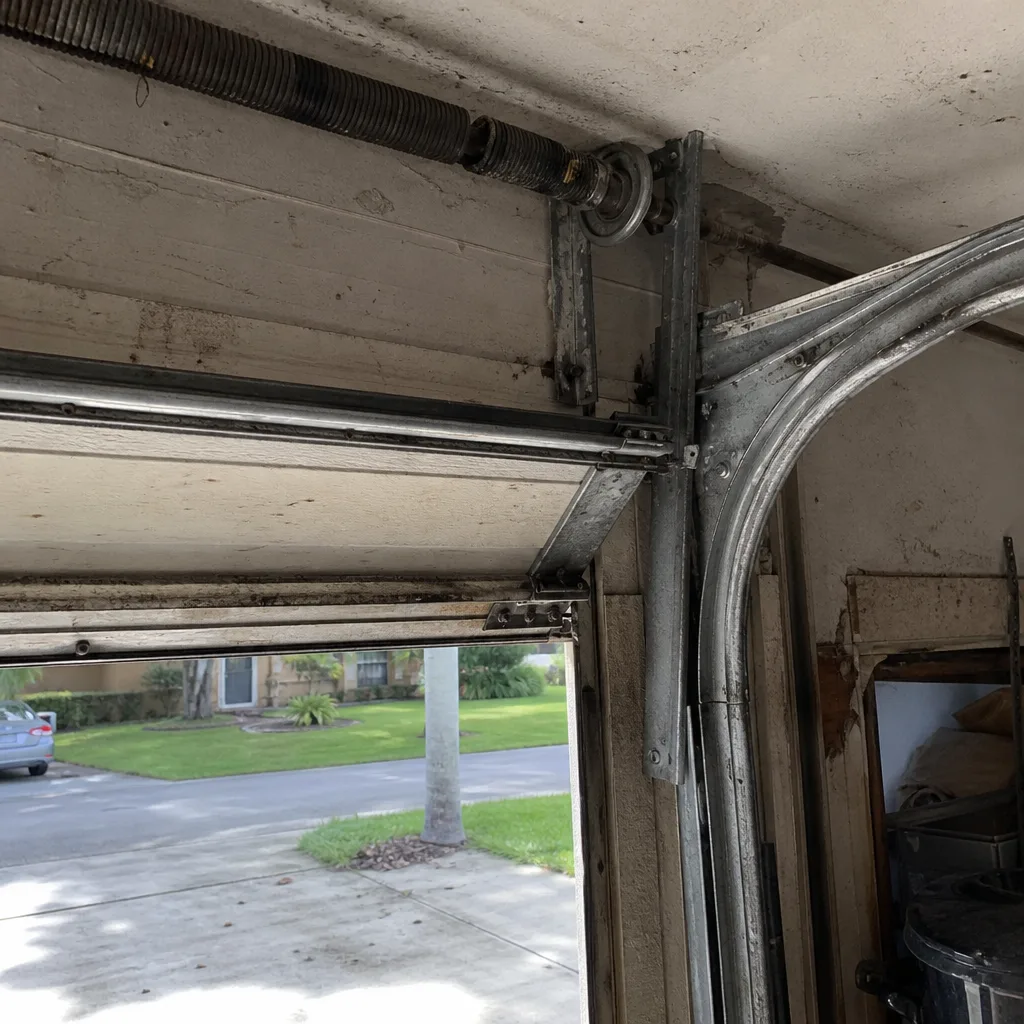 Before
 After
 Before
 After
 Before
 After