Last updated October 30, 2026
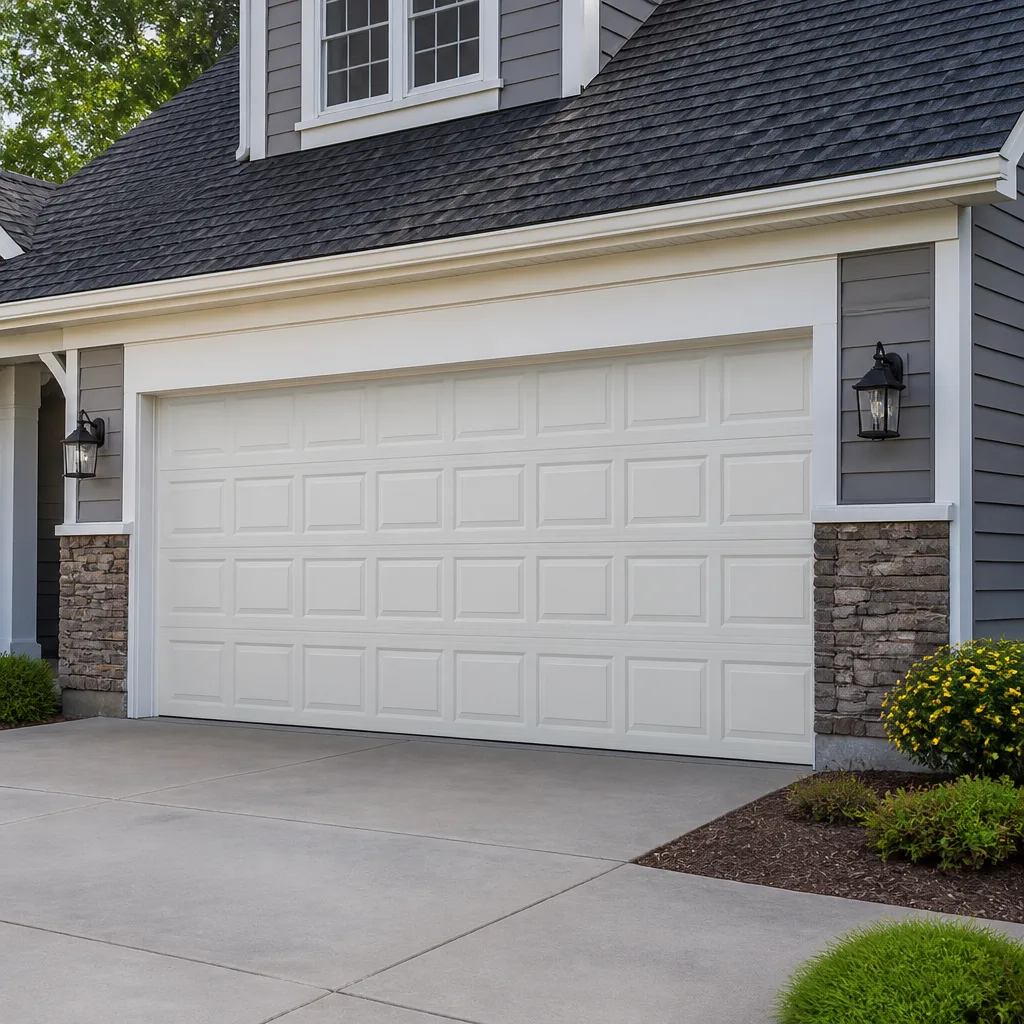 Raised-panel steel
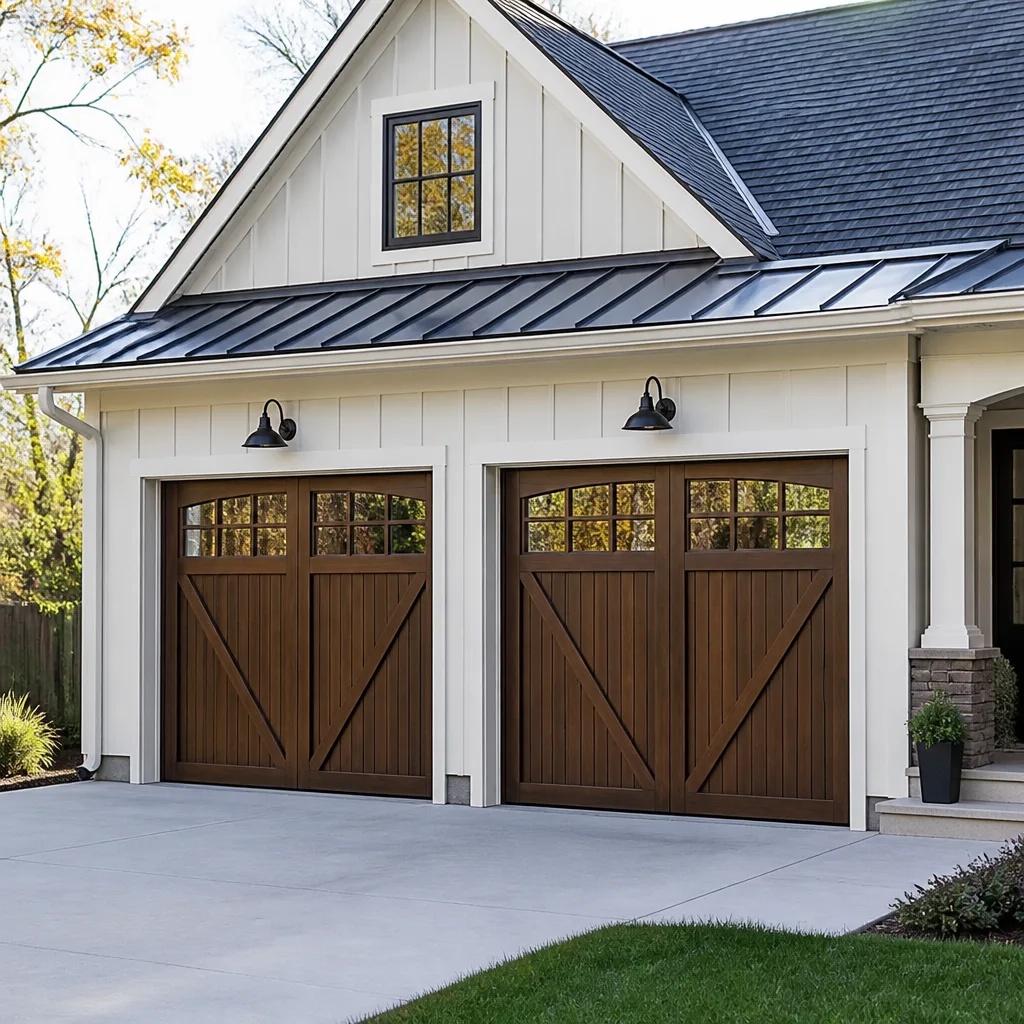 Carriage house
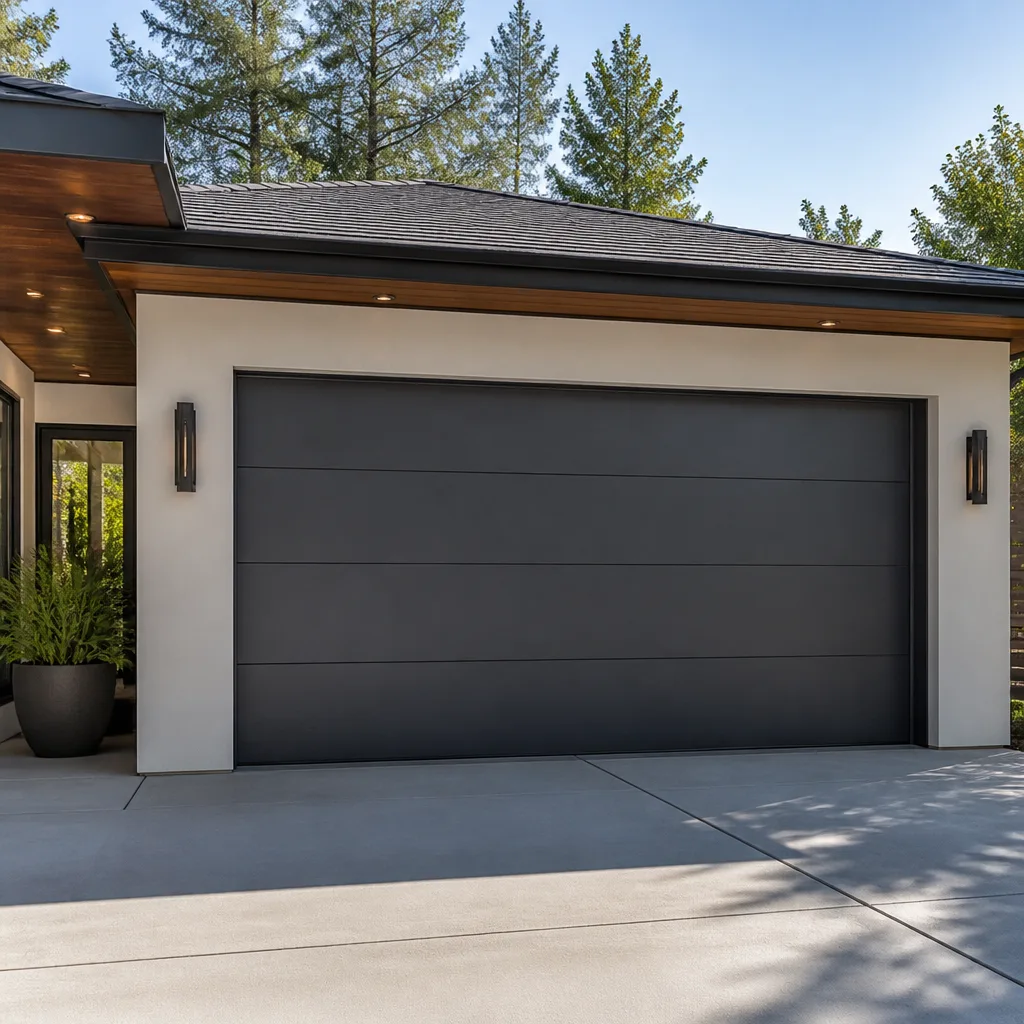 Modern flush
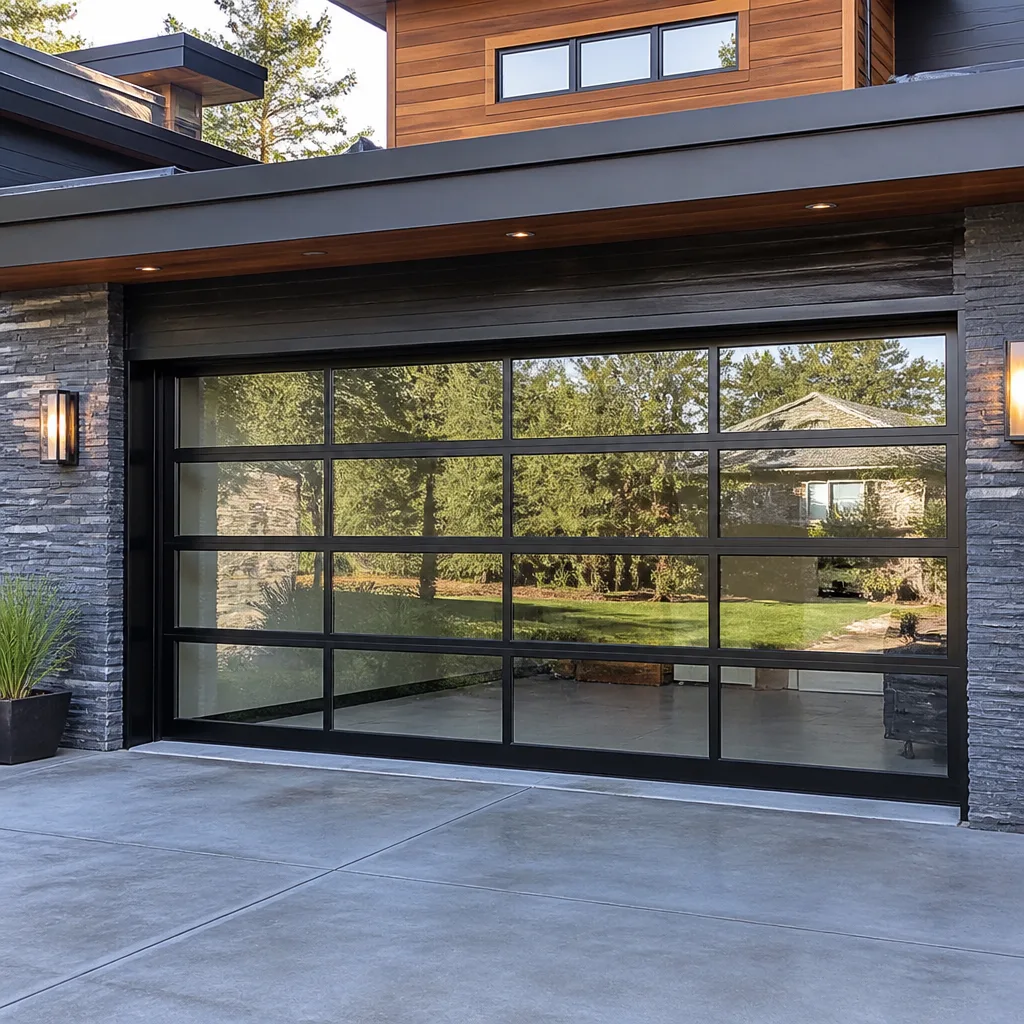 Full-view glass
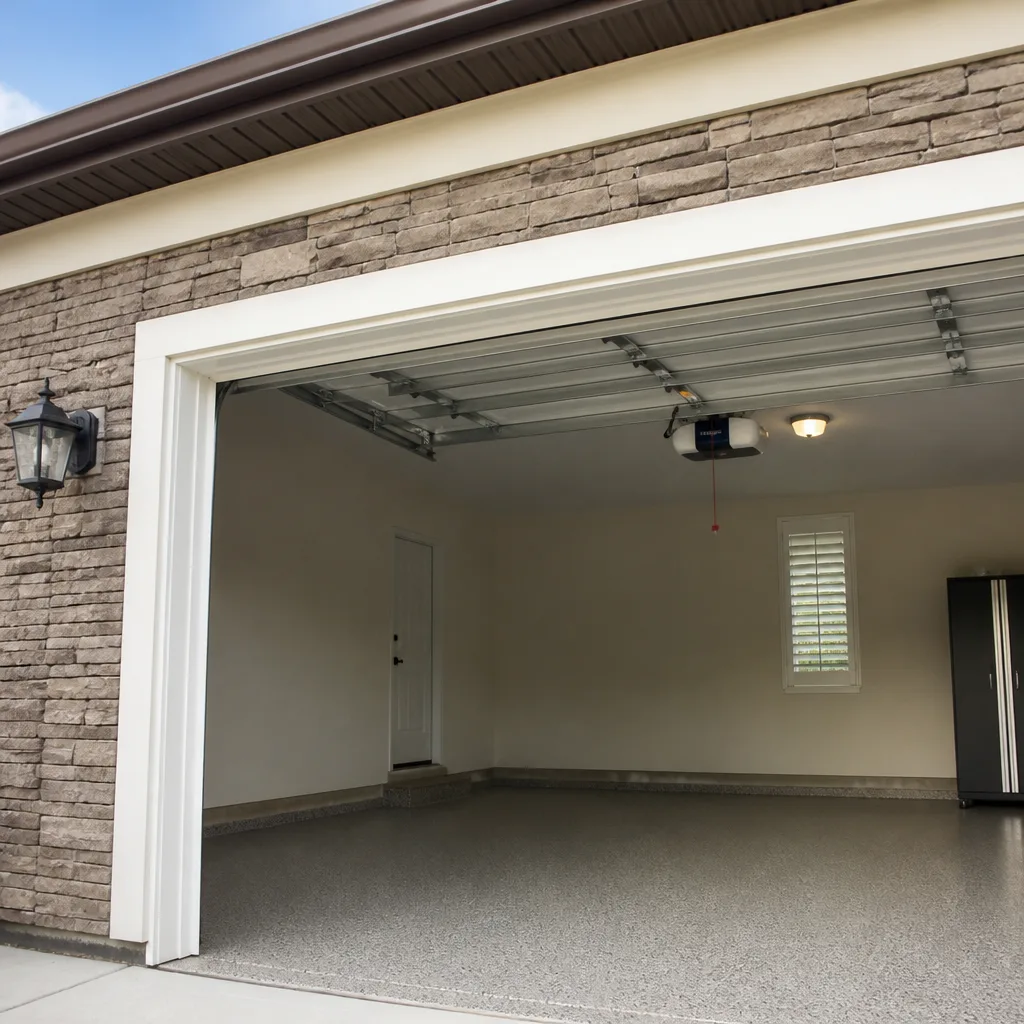 LiftMaster openers
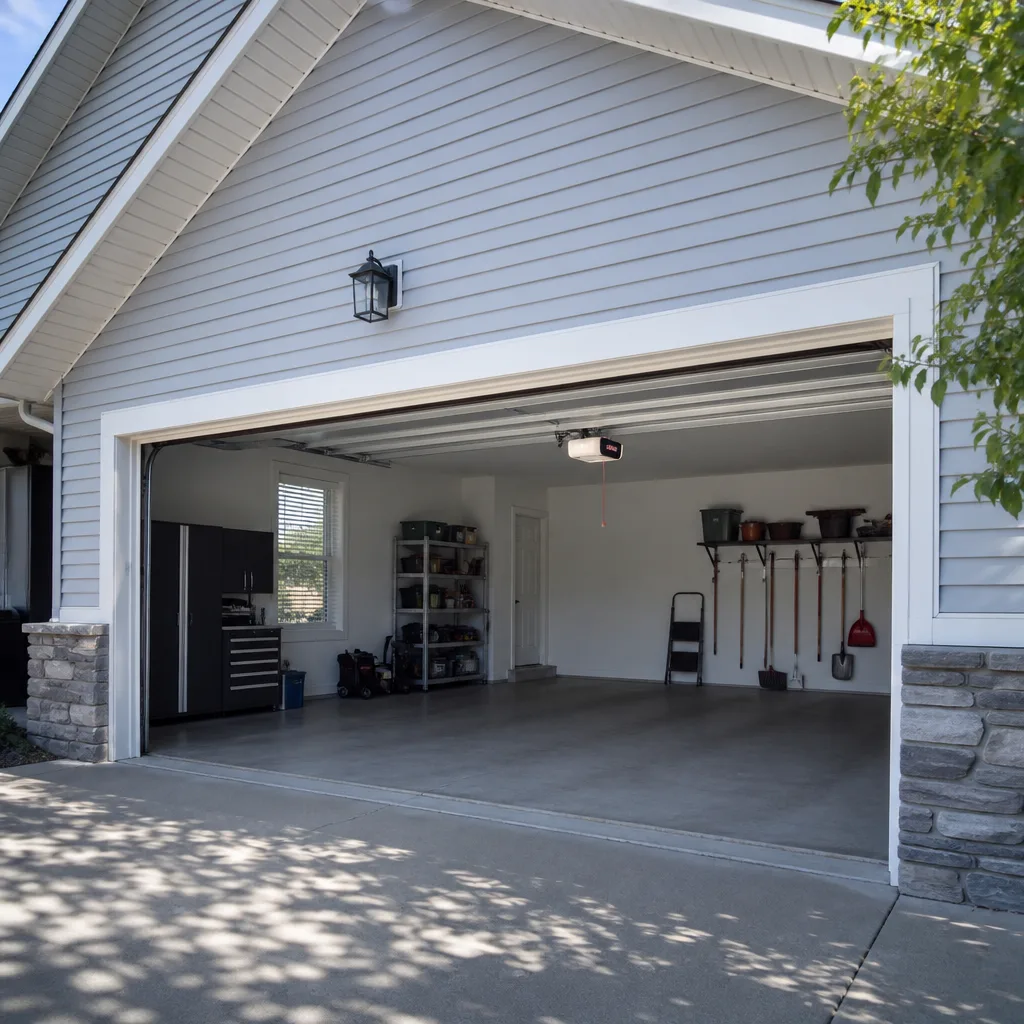 Chamberlain openers
Full 25-point door and opener safety check with every visit - springs, cables, rollers, tracks, and your LiftMaster or Chamberlain opener included
You get a price before we start. It does not change when the truck arrives.
Get your free estimateSeasonal Garage Door Care for Hollywood: Year-Round Homeowner’s Guide
Most seasonal garage door maintenance guides are written for places with snow, frost heave, and a hard winter freeze. They tell you to lubricate your rollers before the first snow and check the weather seal against sub-zero drafts. In Hollywood, that advice is useless eleven months out of twelve. What actually matters here is simpler and more demanding: hurricane season, and the five-month dry window you get afterward to fix what the heat, salt air, and storm pressure did to your door. This guide to garage door in Hollywood covers the real cycle, from June storm prep to December spring replacement, including what most homeowners miss until a door won’t open and a car is stuck inside.
Styles & brands we work with
Quick Answer
Seasonal garage door care in Hollywood means two distinct jobs: pre-hurricane reinforcement and inspection from June through November, and corrective maintenance, part replacement, and weatherproofing during the dry season from December through May. The most important single task is checking your torsion springs and cables before hurricane season starts, because that’s the part most likely to fail under wind-load stress, and failure means the door cannot be opened manually or automatically when you need it most. For details, see our complete repair guide for Hollywood homeowners.
Table of Contents
- Why Hollywood’s Climate Breaks Garage Doors Differently
- Hurricane Season Prep: June Through November
- Post-Storm Inspection Protocol
- Dry Season Maintenance: December Through May
- How Summer Heat Cycles Age Springs and Hardware
- Rainy Season Drainage and Threshold Care
- Weatherstripping and Seal Replacement
- Common Mistakes to Avoid
- When to Call a Professional
- Frequently Asked Questions
- The Bottom Line
Why Hollywood’s Climate Breaks Garage Doors Differently
Hollywood sits in a coastal subtropical zone. That means three things for your garage door: relentless UV exposure, salt-laden air, and a six-month stretch where the relative humidity rarely drops below seventy percent. None of those show up in a generic seasonal maintenance checklist. The UV breaks down nylon rollers and plastic components. Salt air accelerates corrosion on hinges, brackets, and any exposed steel. Humidity works its way into wood doors that are not sealed on all six edges, causing swelling in summer and contraction in winter. We’ve worked on doors in Hollywood neighborhoods from the Lakes to Emerald Hills where the same brand of door, installed the same year, fails differently depending on whether it faces east toward the ocean or west toward the Turnpike. Our buyer’s guide for choosing the right garage door brand in Hollywood explains what to look for. The takeaway is not that all garage doors fail here. It’s that they fail on a schedule you can plan around, if you know what to look for.
One more thing: Hollywood sees about 60 inches of rain per year, but almost all of it arrives in a five-month window. That concentrated wet season saturates the soil around your foundation, and with it, the bottom section of your garage door frame. The bottom seal, the track, and the lower panels take the kind of punishment that a homeowner in Tampa or Miami also sees, but on slightly different storm tracks. This is not a generic Florida problem. It’s a Hollywood problem with Hollywood solutions.
Hurricane Season Prep: June Through November
Hurricane season in Hollywood officially runs from June 1 through November 30, and the practical window for prep work is the six weeks before the first named storm of the year. The goal is not to make your garage door hurricane-proof. That’s a specific garage door installation decision, usually involving a wind-rated door and reinforced tracks. The goal is to make sure the door you have will keep functioning before, during, and after a storm, and will not become a projectile or a liability.
Here’s what we tell Hollywood homeowners to check before the season gets going:
- Test your emergency release. Pull the red cord and confirm you can lift the door manually. If you cannot lift it, the springs are not doing their job, and you need garage door repair in Hollywood before a storm, not after. A door that cannot be opened manually during a power outage becomes a wall between you and your car.
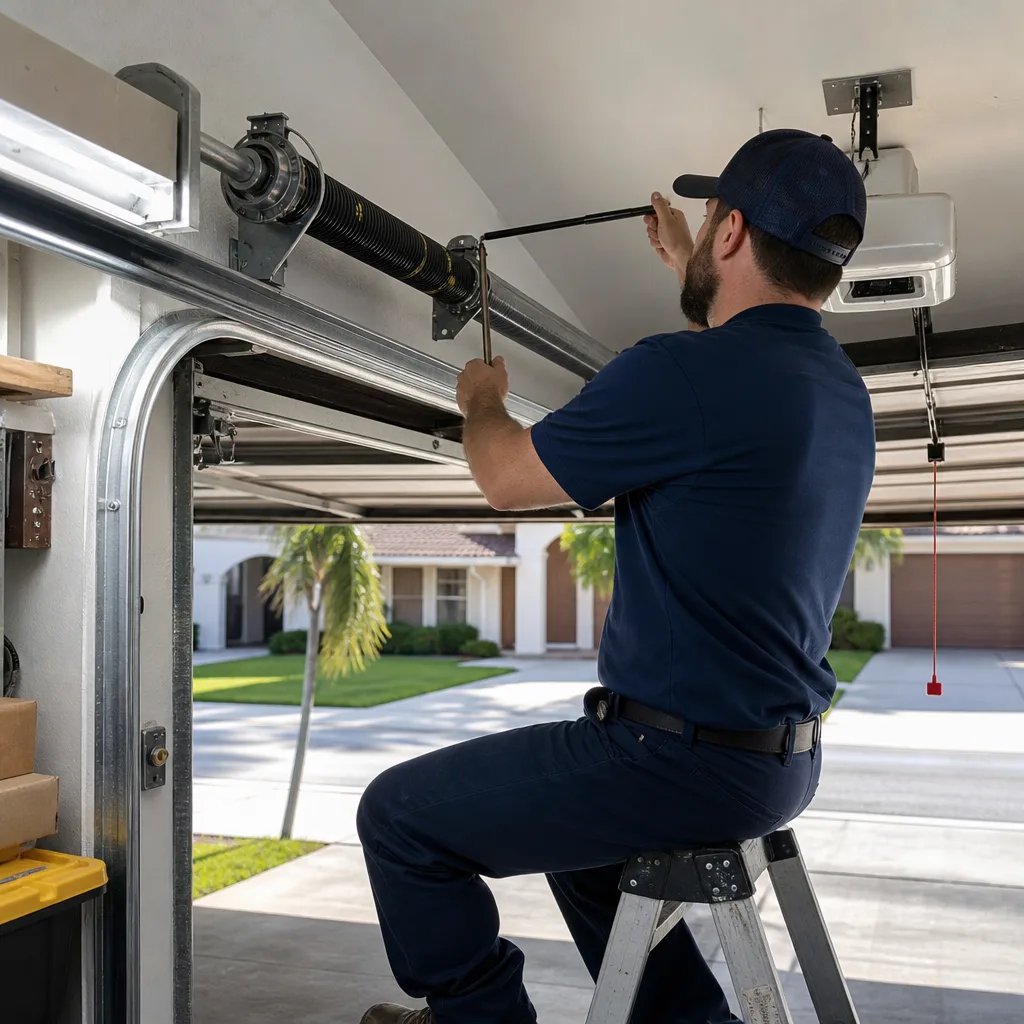
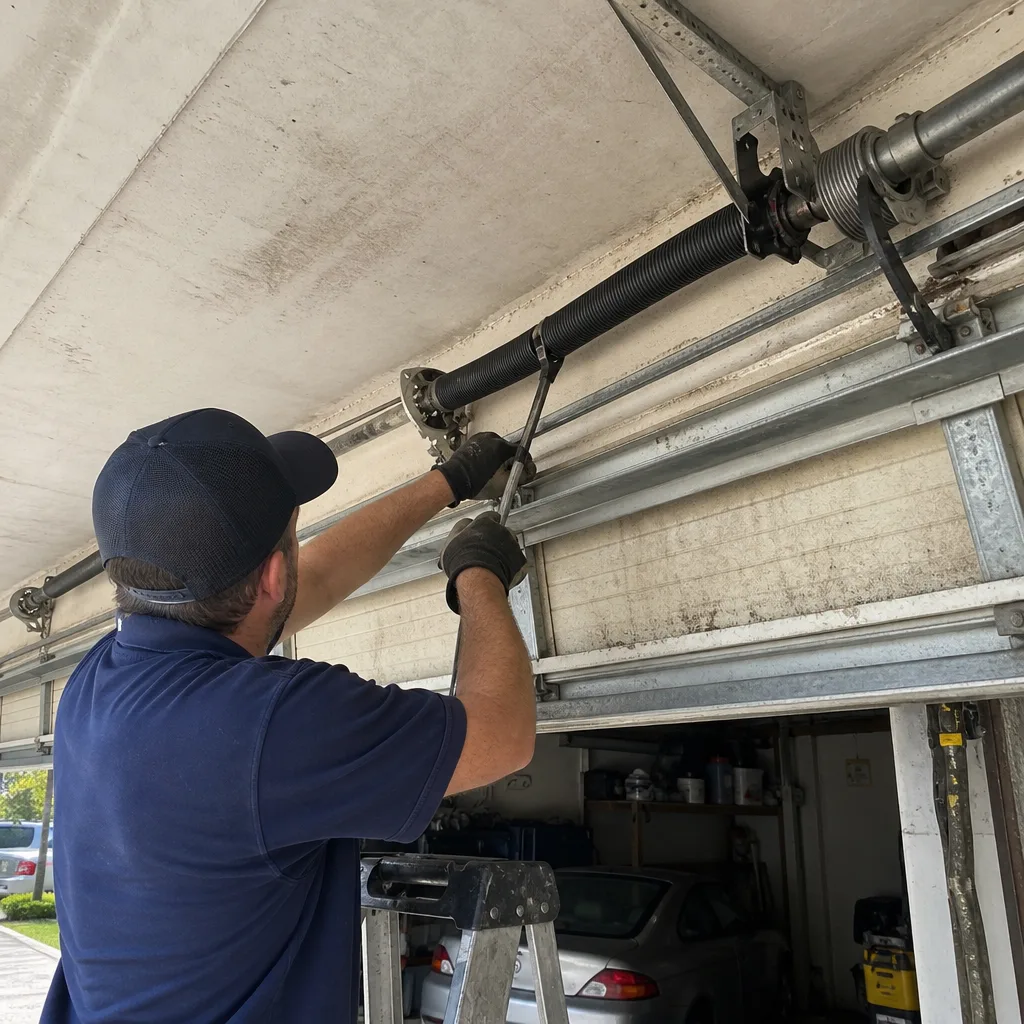
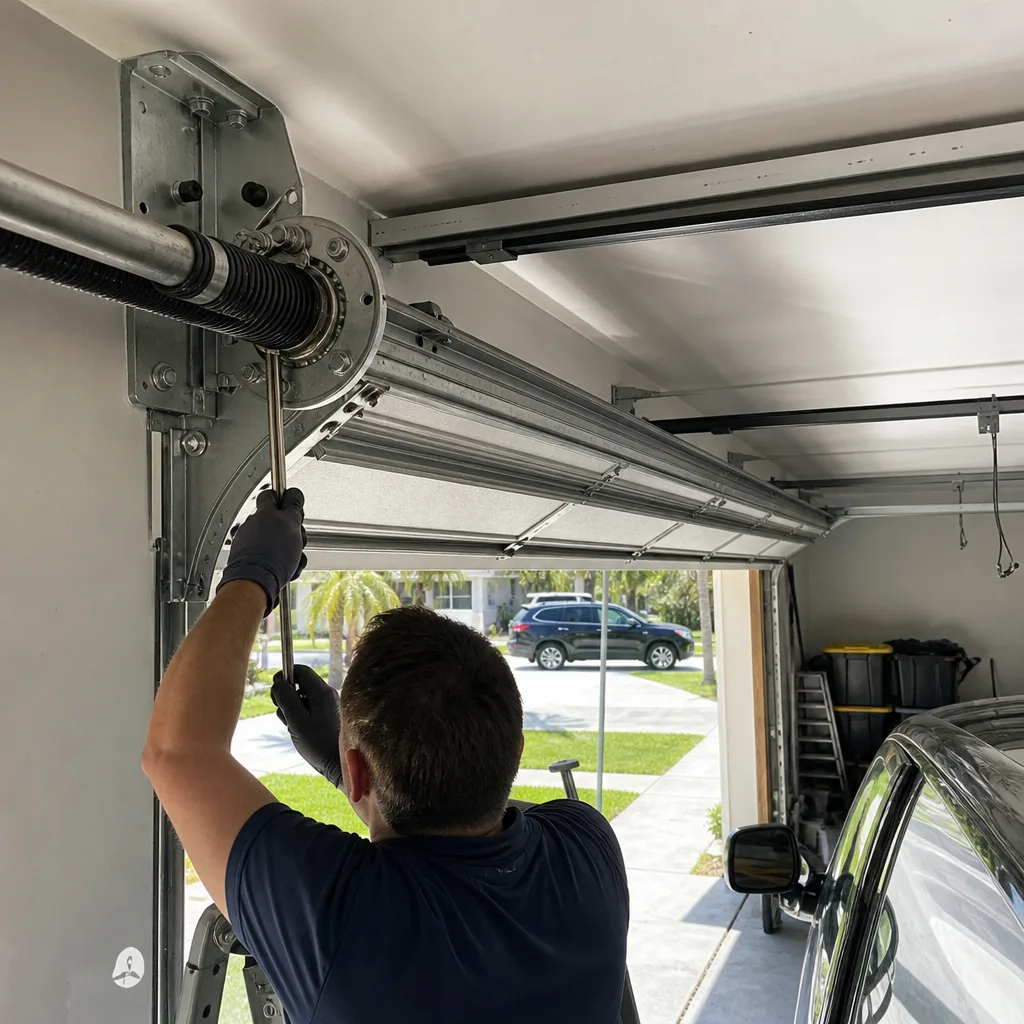
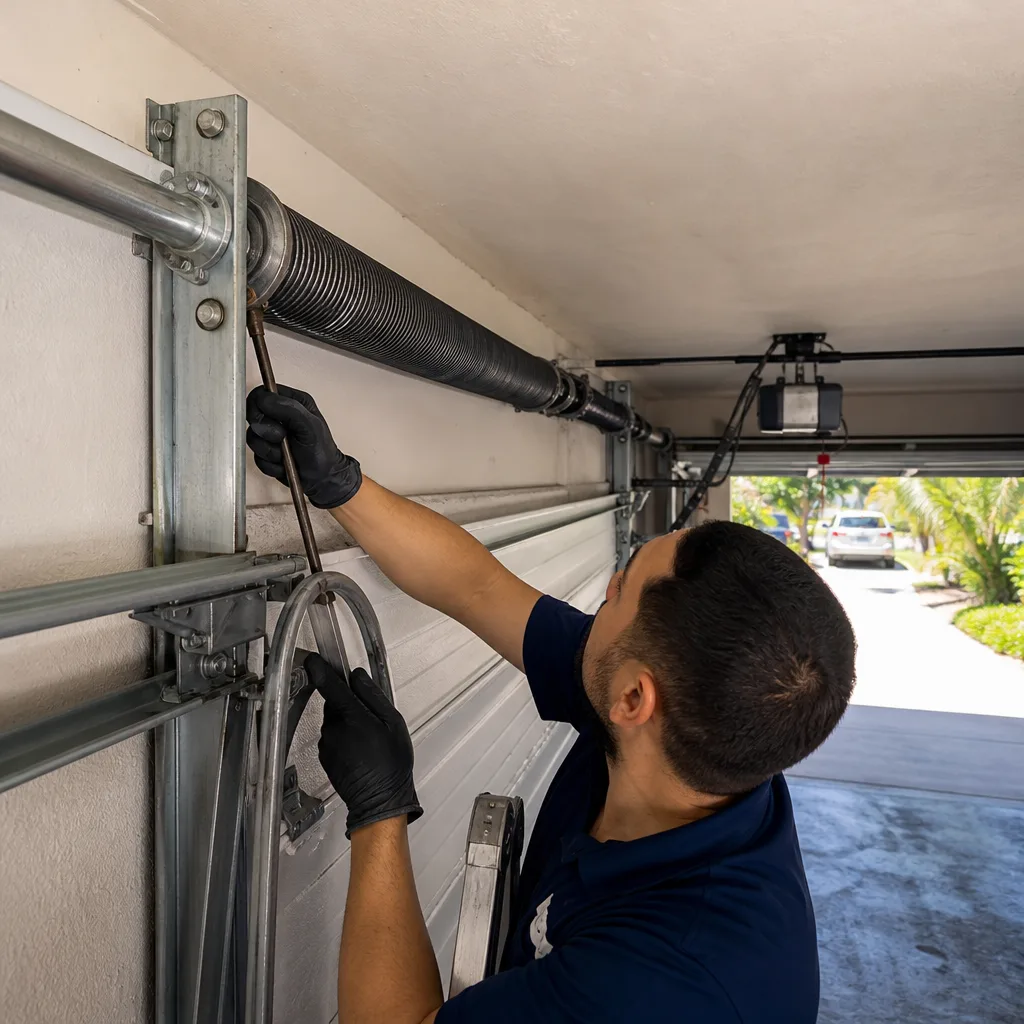
- Inspect the torsion springs. Look for gaps in the coil, rust buildup, or any sign the spring is separating. A spring that breaks during a storm is not repairable after the fact, and replacement parts are hard to source during an active hurricane watch.
- Check the bottom seal. Run your hand along the rubber strip at the bottom of the door. If it’s cracked, stiff, or pulling away from the aluminum retainer, water will get under the door during the first heavy rain band. Hollywood’s afternoon thunderstorms in June and July are enough to test this even without a named storm.
- Tighten every visible bolt and bracket. Wind-load pressure on a 16-foot wide door exerts enormous lateral force. Loose lag bolts on the track or the operator mount will fail under that load.
- Lubricate all moving parts. Use a silicone-based or lithium-based garage door lubricant on rollers, hinges, and the torsion spring. Avoid WD-40; it cleans but does not lubricate.
- Document the door’s condition. Take clear photos of the door, the springs, the opener, and the tracks. If a storm damages the door, you’ll need those photos for an insurance claim. Homeowners who do this report much smoother claims.
Additionally, consider whether your door is wind-rated. If you live in a Hollywood neighborhood that gets direct wind exposure during storms, like areas east of Federal Highway, talk to a professional about whether your door should be reinforced or replaced with a wind-rated model. Reinforcing an old door with retrofit kits is possible in some cases, but the structural condition of the door matters.
For Hollywood homeowners, we also recommend a simple step many guides omit: test your opener’s battery backup if it has one. After Hurricane Wilma in 2005 and Irma in 2017, some neighborhoods in Hollywood were without power for over a week. A LiftMaster or Chamberlain opener with a working battery backup means the garage door still opens when the power is out. If your opener does not have a backup and you rely on the garage as your primary entry, that’s a conversation worth having before August.
Post-Storm Inspection Protocol
After any storm that brings sustained winds above 40 mph or flooding to your Hollywood neighborhood, do not open your garage door blindly. The first operation after a storm is the most likely to reveal hidden damage, and a door that comes off its track under power can cause serious injury or further damage. Here’s the ordered sequence we recommend:
- Visual check before touching anything. Walk outside and look at the door from a few feet away. Is it square in the opening? Are the panels dented or pushed inward? Is the track bent or pulled away from the wall? If you see any of those, call a professional before operating the door. A bent track is under tension, and forcing the door through it can launch the door off the track.
- Check the bottom seal and threshold. If floodwater came under the door, the seal may be compressed or dislodged, and the track may have debris packed into it. Clear obvious debris with a broom, not your hands.
- Pull the emergency release and try to lift the door manually. If it is unusually heavy, difficult to move, or moves unevenly, stop and call for service. That’s a spring or cable problem that will not fix itself.
- Operate the door via the opener only after the manual test passes. Watch and listen. A grinding noise, a jerk on one side, or a door that stops mid-travel all indicate damage that needs professional diagnosis.
- Re-photograph everything. Storm damage claims are easier with before photos and immediately-after photos. The pre-storm documentation step from the previous section pays off here.
In Hollywood, this protocol matters more than in inland cities. Storm surge and wind gusts off the Atlantic are different from the gusting inland communities get. A Hollywood door can look fine from inside the garage while the exterior side has taken a horizontal object at 60 mph. The first person who opens it after the storm is the one who finds out. We’d rather that person not be you.
And if the door was submerged during street flooding anywhere in Hollywood, the bottom panels and the lower track are at risk. Floodwater carries silt and contaminants that embed in rollers and hinges. Even after the water recedes, the abrasive material stays behind and grinds down moving parts. After a flood event, a full professional inspection is the right move, not a courtesy.
Dry Season Maintenance: December Through May
November 30 ends hurricane season, and December 1 begins what Hollywood homeowners should think of as the maintenance window. The weather is dry, the humidity drops enough to make paint and sealants cure properly, and there is no storm pressure on your schedule. If you have a repair, a replacement, or an upgrade on your list, this is the five-month window to do it.
The single best use of the dry season is spring replacement. Torsion springs are rated for a specific number of cycles, usually 10,000, and in Hollywood’s heat, that lifespan is often shorter than the manufacturer’s rating. A spring that fails in the middle of July, during the daily thunderstorm pattern, leaves a garage door locked closed, and emergency service in storm season is often booked out. A spring replaced in January is done on your schedule, with parts in stock and pricing that hasn’t been affected by post-storm demand spikes. If you hear any creaking from the spring, see visible gaps in the coil, or the door feels heavier than it used to, this is the time to act.
The dry season is also the right time for:
- Painting or sealing a wood door. Hollywood’s summer humidity expands wood, and a door that’s properly sealed on all six edges in winter will stay dimensionally stable in summer. Unsealed wood doors in Hollywood absorb moisture unevenly, which leads to warping and binding in the track.
- Weatherstripping replacement. The vinyl or rubber strips along the sides and top of the door degrade much faster in Florida’s UV exposure than in northern climates. Replacing them during dry weather is cleaner and the adhesive cures properly.
- Garage door installation in Hollywood if you’re considering one. Lead times are shorter, crews have more schedule flexibility, and you avoid the June scramble. Many Hollywood homeowners upgrade to wind-rated doors in the dry season, and that’s the right timing.
- Opener service or replacement. If your Genie or Chamberlain opener is getting noisy, running slower, or losing range on the remote, the dry season is when garage door opener repair in Hollywood is easiest to schedule.
We work on doors across all eight major brands we’re certified to service, and we see the same pattern every year. The Hollywood homeowners who address mechanical issues in the dry season are the ones who aren’t calling us in a panic during the first named storm. The ones who wait are calling us in July with a door that won’t open and a repair that could have been done in February for less stress and often less money.
For homeowners who are new to Hollywood or new to Florida garage doors generally, here’s a schedule that works:
- December: Full inspection after hurricane season ends. Note any issues.
- January – February: Replace worn parts: springs, cables, rollers, seals. Anything the inspection flagged.
- March – April: Cosmetic and protective work: painting, sealing, washing the door to remove salt residue.
- May: Pre-hurricane season prep starts. Lubricate, tighten, test.
That cadence covers the full year and matches Hollywood’s two-season reality without borrowing from any guide written for Chicago or Minneapolis.
How Summer Heat Cycles Age Springs and Hardware
A Hollywood garage door goes through a daily thermal cycle from May through October that is hard on metal components. In the morning, the door and its hardware start the day at the overnight low, often in the mid-70s. By mid-afternoon, a closed garage in Hollywood can reach 110°F inside, even when the outside temperature is only 88°F. That’s a 30 to 40 degree swing, every day, for six months.
Torsion springs are coiled steel, and steel expands and contracts with temperature. Each daily cycle applies a microscopic amount of stress to the spring’s internal structure. Over years, that stress accumulates as metal fatigue. This is one reason why torsion springs in Hollywood and other South Florida cities often fail before their rated cycle count. The spring’s cycle rating is tested in a controlled environment, not in a Hollywood garage that turns into an oven every afternoon.
The same thermal cycling affects other components:
- Nylon rollers become brittle and crack under repeated heating and cooling. A cracked roller can shatter, and when it does, the door can bind on that side and twist in the track.
- Aluminum tracks expand and contract, and over years, the mounting brackets can work loose. A loose track against a thermally moving door is a recipe for misalignment.
- Opener motor capacitors degrade faster in high heat. A garage that consistently tops 100°F shortens the lifespan of the electronic components in the opener head.
- Belt drives, common on newer Chamberlain and LiftMaster openers, stretch slightly in heat and contract in cool, which changes tension and can produce a different noise profile between seasons.
The practical lesson for Hollywood homeowners is not to panic about a hot garage. It’s to accept that parts like springs, rollers, and opener electronics are consumables here. They will not last as long as the manufacturer’s brochure suggests, and that is not a defect. It’s the environment. A spring that’s been in service for seven years in Hollywood has done real work. When it fails, that’s not a surprise; it’s the end of its service life.
If you want to slow the thermal degradation, the most useful step is to ensure the garage has some passive ventilation. Adding a vent near the ceiling on the west-facing wall, or keeping the garage door open a few inches during the hottest hours if security allows, can reduce peak internal temperature by 15 to 20 degrees. That extends the life of every component in the room.
Rainy Season Drainage and Threshold Care
Hollywood’s rainy season delivers more water in five months than many cities see in five years. The daily afternoon thunderstorm pattern from June through September means your garage door’s bottom seal is repeatedly tested by standing water, and in some Hollywood neighborhoods, especially those built on the lower, flatter terrain west of 95, water pools at the driveway apron and sits against the door.
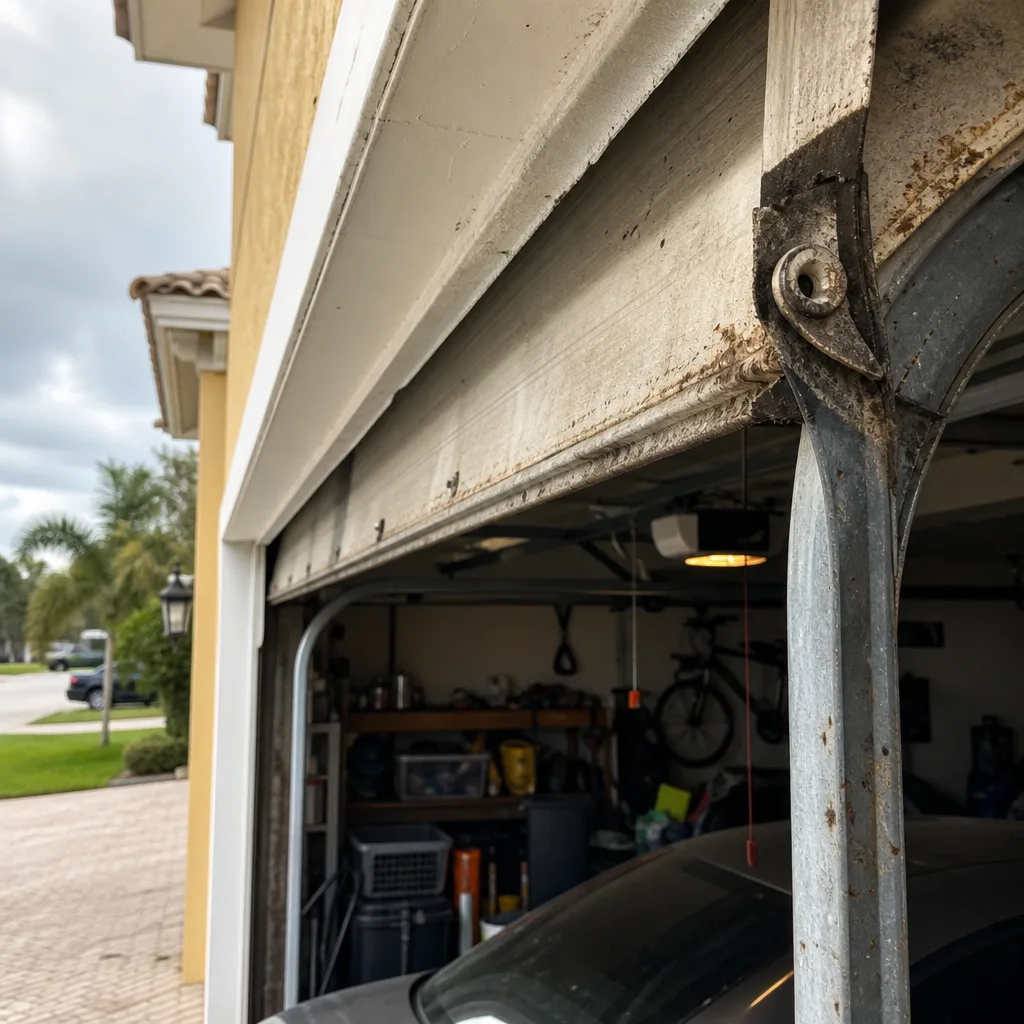
Here’s what that standing water does. The bottom seal, which is a rubber-like extruded strip, absorbs water over time if it sits in it repeatedly. The metal retainer that holds the strip degrades through corrosion. The track itself, if it’s in contact with puddled water, starts to rust at the bottom fastening points. And on wood doors, water wicking up from the bottom edge causes panel delamination and swelling that eventually makes the door bind in the opening.
What you can do, in order of priority:
- Check the drainage path. During the next heavy Hollywood downpour, watch where the water goes at the garage door. If it pools against the door, you have a grading issue, not a garage door issue. Correct the grade so water flows away from the door. This is the only permanent fix.
- Inspect the bottom seal after any week with heavy rain. Squeeze it. If it stays compressed, it’s saturated and should be replaced. A good bottom seal should spring back within a second.
- Clear the track drains or weep holes if your door has them. Some track designs have small openings at the bottom to let water escape. If they’re clogged with dirt or debris from Hollywood’s construction-heavy roads, water stays in the track and rusts it from the inside.
- Wash salt and silt off the door and track monthly during the rainy season. Hollywood’s proximity to the ocean means rainwater carries some salt, and the splash-back from your driveway carries sand and silt. A hose-down takes ten minutes and prevents accumulated corrosion.
One specific Hollywood issue: irrigation overspray. Many homes in neighborhoods with large lawns have sprinkler heads that spray directly onto the garage door or the track. That water is often from a well or municipal supply, and it hits the bottom of the door every morning. If your sprinkler is wetting your garage door, adjust or replace the head. Chlorinated water on bare steel is a slow corrosion machine.
Particularly in the neighborhoods east of 95, closer to the Intracoastal, the combination of salt air, irrigation, and daily storm water turns small corrosion problems into structural ones. A bottom bracket that might last 15 years in a dry climate can be dangerously rusted in Hollywood after eight.
Weatherstripping and Seal Replacement
Weatherstripping on a Hollywood garage door does three jobs. It keeps rain and wind-driven water out, it keeps the cooled air inside the garage (which matters if you have a conditioned garage or a freezer out there), and it keeps pests out. Hollywood has plenty of pests: rodents, lizards, and insects all find a garage with a compromised seal to be an inviting space.
There are three seals to inspect:
- The bottom seal, which slides into a retainer channel on the bottom of the door. It should be flexible, not cracked, and it should contact the floor evenly across the full width. In Hollywood, bottom seals typically need replacement every 2 to 4 years, depending on sun exposure and driveway condition.
- The side and top seals, which are nailed or screwed to the exterior trim and press against the door when it’s closed. These take direct sun and rain. In Hollywood’s UV environment, vinyl seals become brittle within 3 to 5 years and stop making good contact. The telltale sign is a visible gap between the seal and the door when the door is closed, usually wider at the top where the sun has bent the seal outward.
- The header seal, which sits above the door and is often overlooked because it’s hard to see from the ground. A failed header seal lets rain in during a wind-driven storm, and that water drips directly onto the opener motor or into the garage.
Replacing weatherstripping is one of the more accessible garage door maintenance tasks, and many Hollywood homeowners do it themselves. But it matters to get the right material. In Florida’s heat and UV, cheap vinyl weatherstripping from a generic hardware store lasts about a year before it warps and cracks. Rubber or EPDM seals, or marine-grade vinyl, last considerably longer. If you’re buying seals for a Hollywood garage door, look for material rated for UV exposure and high heat.
One thing we tell every Hollywood homeowner: when you replace the bottom seal, check the retainer channel too. The aluminum channel that holds the seal rusts from the inside in humid, salty conditions, and if it’s corroded, a new seal won’t seat properly. That’s a small repair that makes the difference between a seal that works for years and one that fails in months.
For doors from manufacturers like Clopay and Amarr, the seal profile is specific to that model, and using the wrong seal results in poor contact. When in doubt, call a professional who can source the exact profile. It’s cheaper than buying the wrong seal twice and then fixing the water damage that came through the gap.
Common Mistakes to Avoid
- Lubricating with WD-40. WD-40 is a solvent and water displacer, not a lubricant. It strips existing grease and leaves metal surfaces vulnerable. Use a silicone or lithium garage door lubricant.
- Ignoring the manual lift test. Many Hollywood homeowners only discover a spring has failed when the opener motor burns out trying to lift a door the spring is no longer counterbalancing. Pull the release and test the manual lift twice a year, minimum.
- Waiting until hurricane season to fix a creaky door. The creak is the spring or the rollers asking for attention. Waiting until July means competing with every other Hollywood homeowner who did the same thing.
- Painting over rust without treating it. On Hollywood doors, surface rust on hinges and brackets will continue to spread under paint. Remove the rust, treat the metal, then paint. Otherwise you’ve just hidden the problem under a nice color.
- Using interior-grade screws or bolts for exterior garage door hardware. Hollywood’s salt and humidity will rust interior fasteners within a year or two. Use stainless or galvanized hardware, especially in homes east of 95.
- Greasing the track. The track doesn’t need grease. Grease attracts sand and grit, which becomes an abrasive paste that grinds the rollers down. Keep the track clean and dry; lubricate the rollers and hinges instead.
- Forgetting the pre-storm photos. Every Hollywood homeowner who has filed a storm damage claim knows this lesson. Photos from June are the difference between a smooth claim and a denied one.
When to Call a Professional
Some garage door maintenance in Hollywood is genuinely do-it-yourself work: changing a lightbulb in the opener, tightening a visible bolt, hosing off salt residue. But springs, cables, and anything under tension are not in that category. A torsion spring under load stores enough energy to cause serious injury if it releases unexpectedly. We don’t give step-by-step instructions for spring or cable work, and neither should anyone else taking safety seriously.
Call a professional when: the door is off its track, a spring is visibly broken, the cables are frayed or loose, the door is too heavy to lift manually, the opener is making grinding noises, or the door was damaged in a storm and won’t operate smoothly. These are the situations where the right diagnosis prevents a bigger failure later. Benchmark Garage Door Repair offers free estimates in Hollywood, and our techs service whatever brand you have, from a Craftsman opener to a Raynor door to a Chamberlain belt-drive system. Call (833) 589-8332 if you’re not sure whether something needs attention. A phone call costs less than a failed door on a July afternoon.
Frequently Asked Questions
Twice a year. Once in November or December after hurricane season ends, and once in May before the next hurricane season begins. This matches Hollywood’s two-season climate and catches issues at the right time for repair.
Spring replacement in Hollywood typically costs between $180 and $340 for a standard two-spring system, depending on the spring size and door weight, with parts and labor included at most providers. Hollywood pricing can spike during hurricane season when demand peaks, which is another reason to handle spring work in the dry season. Call (833) 589-8332 for an exact quote; estimates are free.
For emergency spring and cable failures, yes, in most cases Hollywood service calls can happen the same day, especially during the dry season. During active storm warnings, same-day availability tightens across all companies, so if your door is showing warning signs, don’t wait for the named storm to arrive.
At Benchmark Garage Door Repair, the price is quoted and agreed before any work begins. If the technician finds additional problems during diagnosis, you’ll be told and given a revised quote before anything else is touched. You approve the work before the work happens.
Yes. Our technicians carry a full inventory of common springs, cables, rollers, and seals, plus parts for LiftMaster, Chamberlain, Genie, and Craftsman openers. That means most Hollywood repairs are completed on the first visit.
That depends on your homeowners insurance policy and the specific cause of damage. Most standard policies in Hollywood cover wind-driven damage to the garage door, but flood damage is typically separate. Pre-storm photos strengthen any claim, and a professional inspection report after the storm is helpful documentation. Call us at (833) 589-8332 if you need a post-storm inspection and report.
The Bottom Line
Hollywood’s garage door care calendar doesn’t look like anyone else’s, and that’s the point. The job is to survive June through November, and to rebuild and upgrade from December through May. The homeowners who do the May inspection, the December spring replacement, and the weekly bottom-seal check during rainy season are the ones whose doors work when they need them. The ones who skip the dry season window are the ones calling for emergency service during a storm warning, paying peak prices, and hoping the parts are available. A few hours of attention each year, on Hollywood’s schedule, keeps a garage door reliable through everything the Atlantic throws at it. For more guides & resources, visit our blog.
Written by the team at Benchmark Garage Door Repair, serving Hollywood since 2011.
See the difference
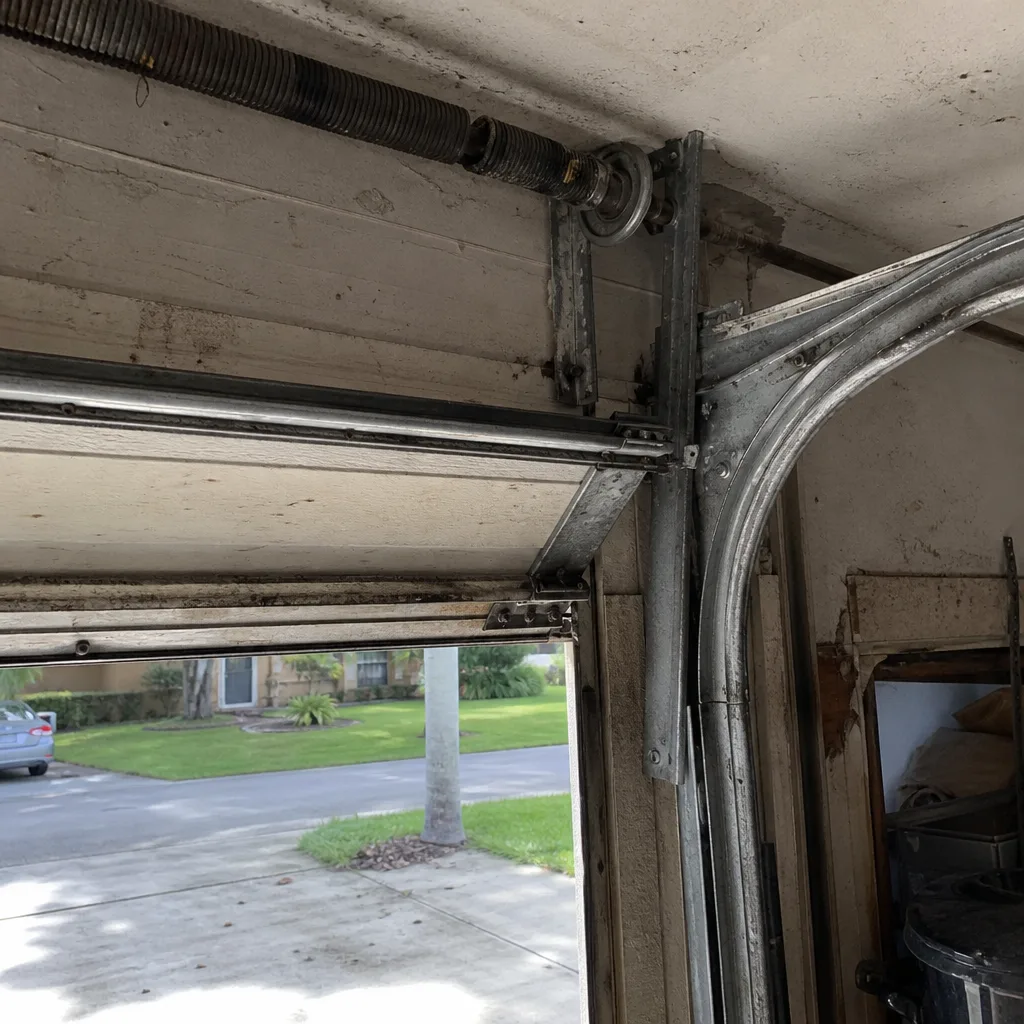 Before
 After
 Before
 After
 Before
 After