Last updated October 30, 2026
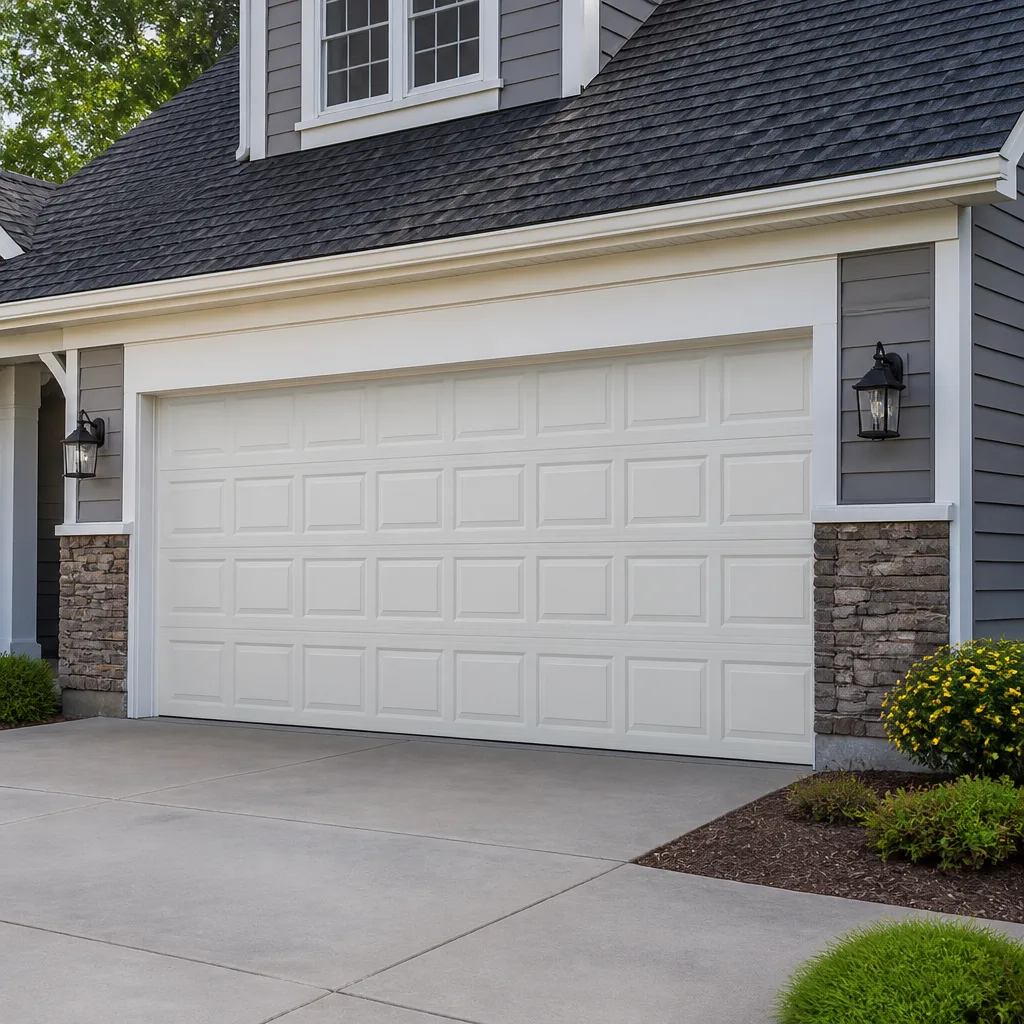 Raised-panel steel
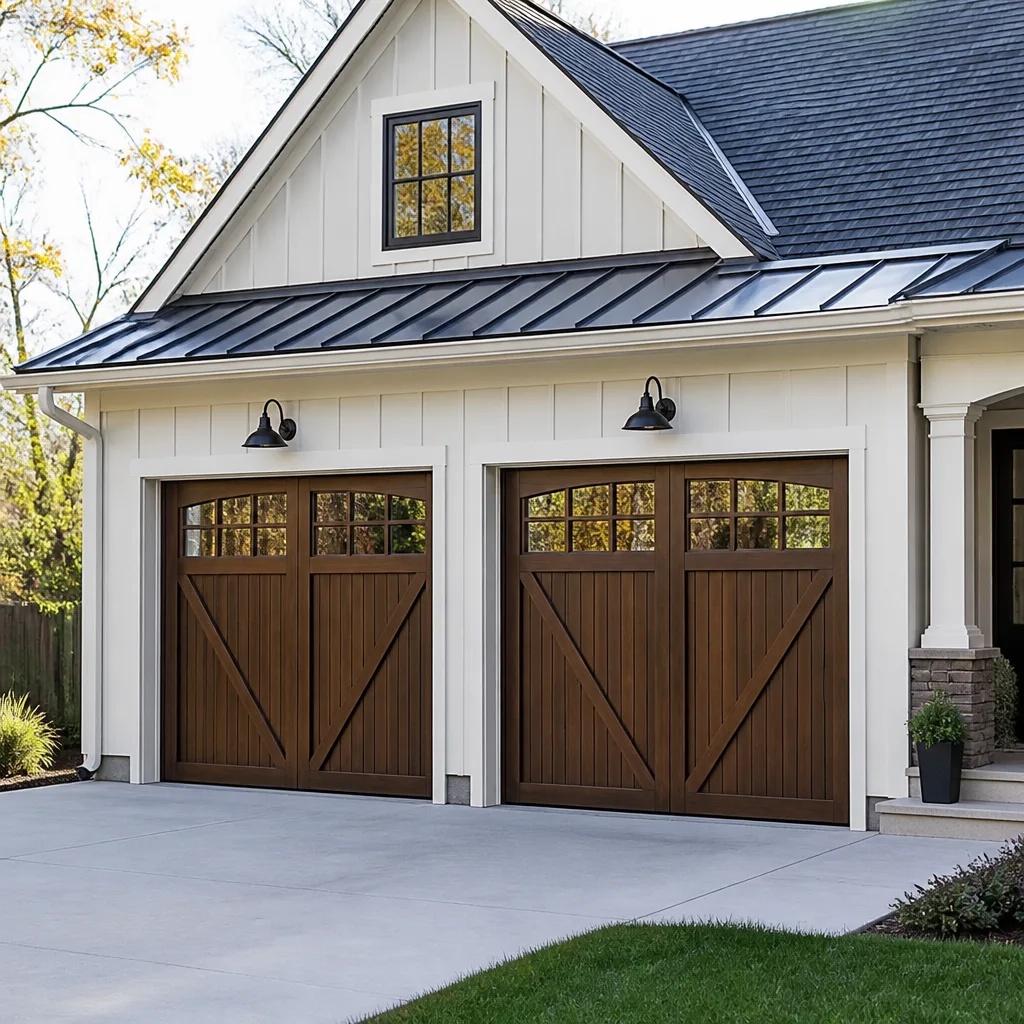 Carriage house
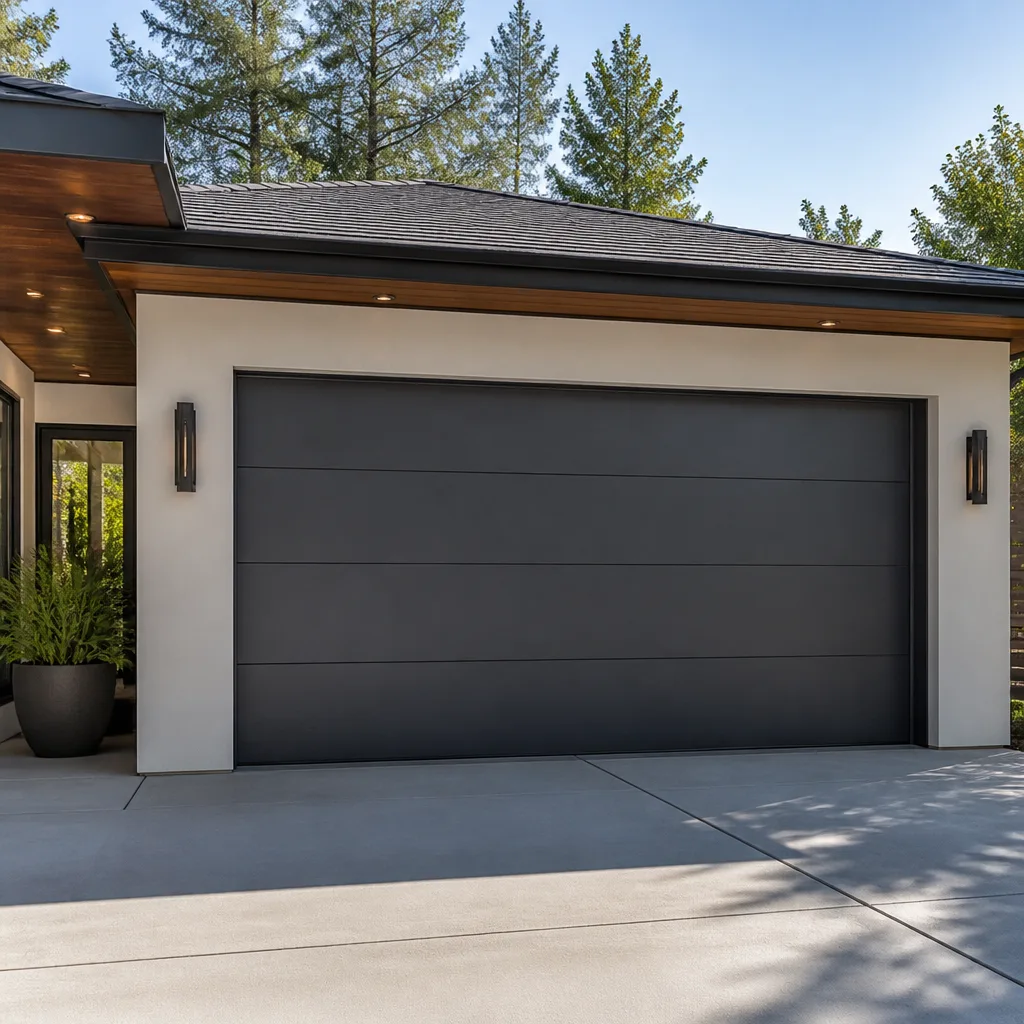 Modern flush
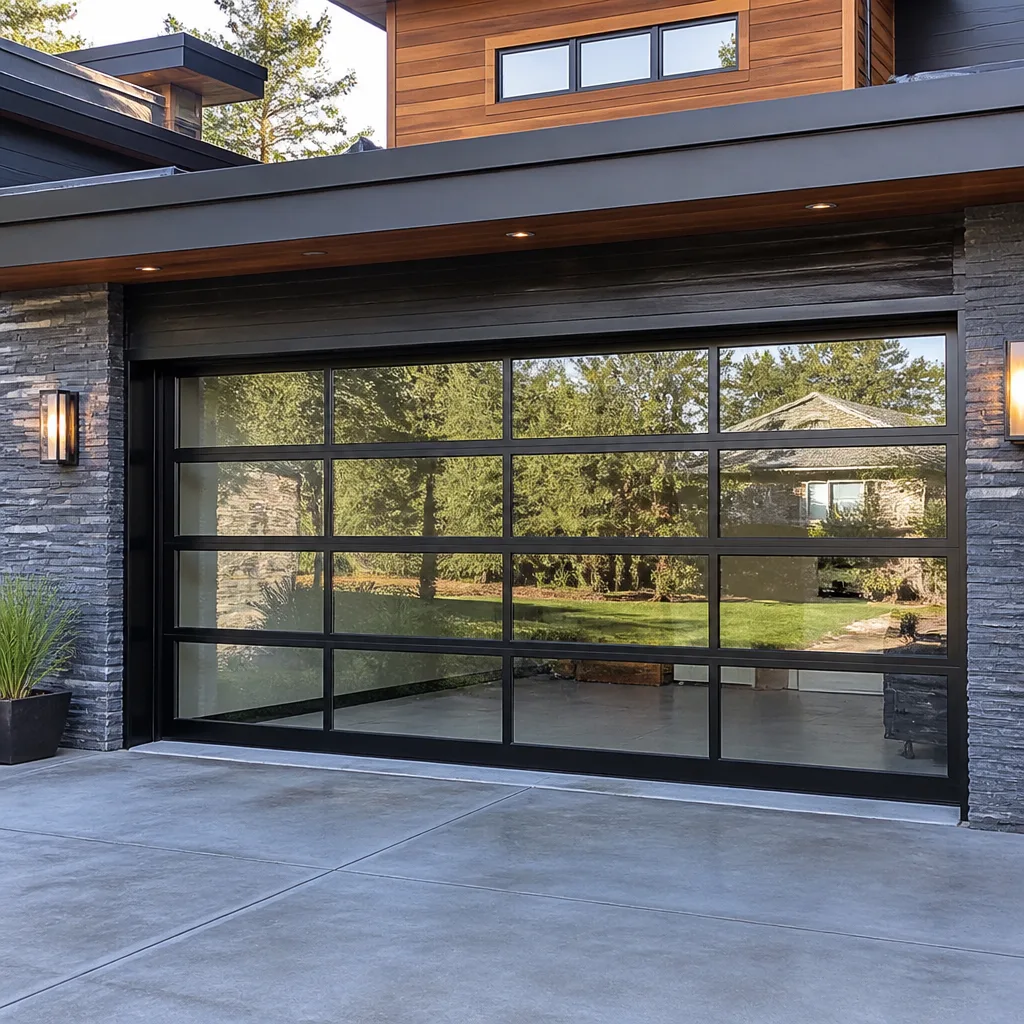 Full-view glass
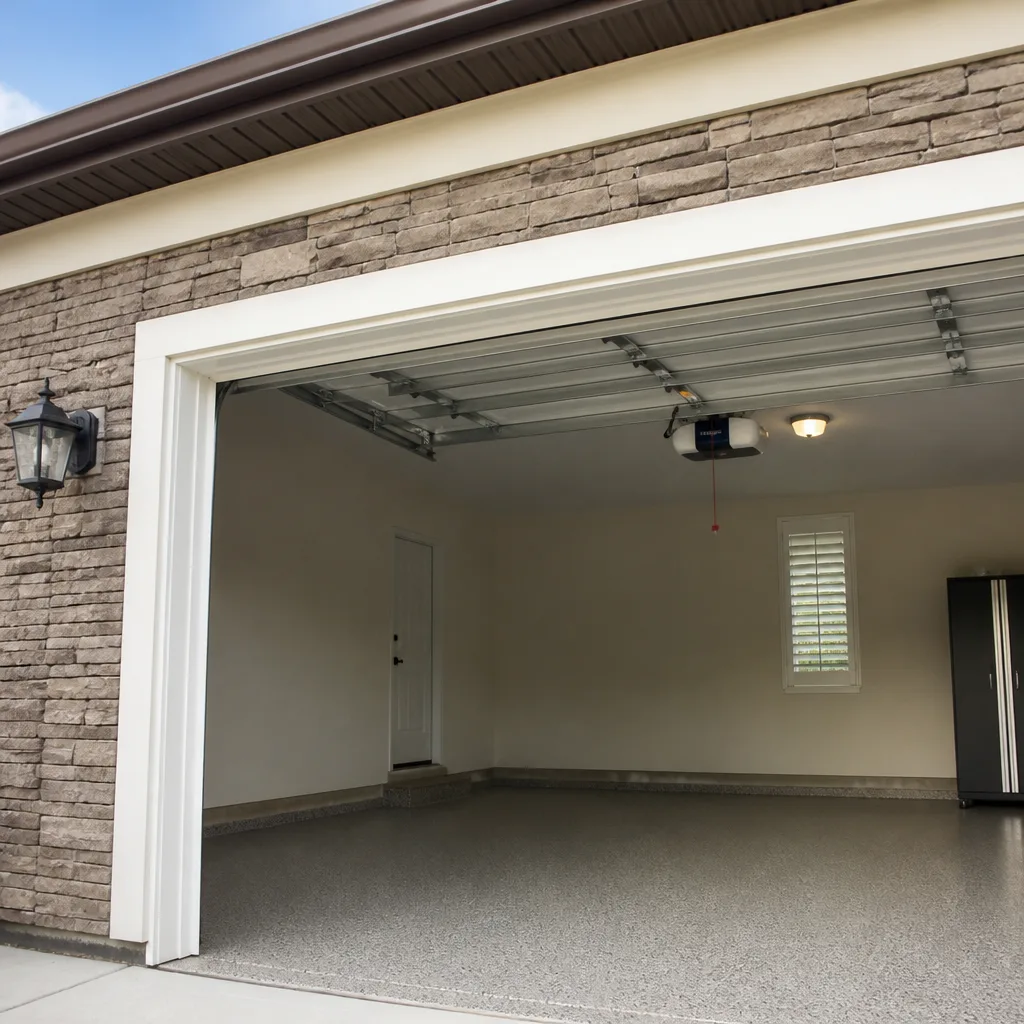 LiftMaster openers
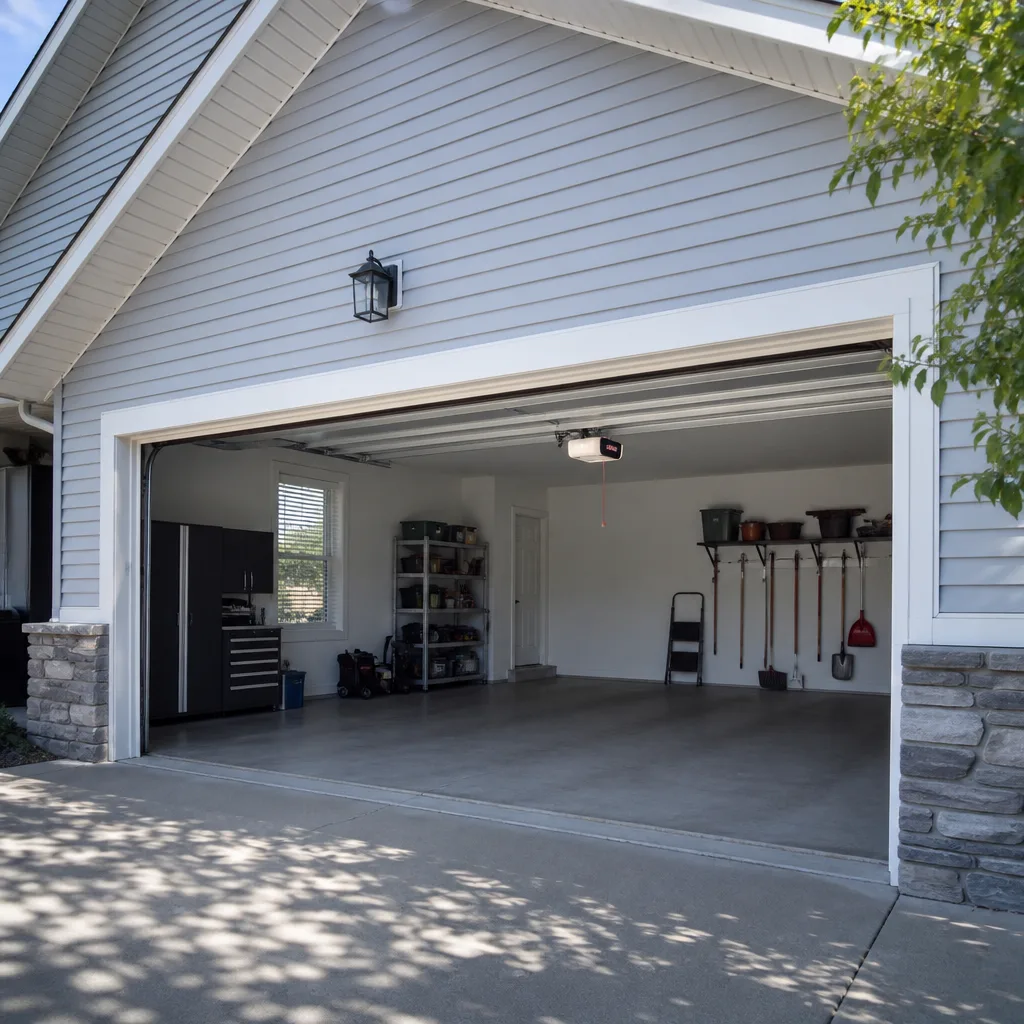 Chamberlain openers
Full 25-point door and opener safety check with every visit - springs, cables, rollers, tracks, and your LiftMaster or Chamberlain opener included
You get a price before we start. It does not change when the truck arrives.
Get your free estimateGarage Door Repair Maintenance Checklist for Hollywood Homeowners
A garage door that fails quietly is the one that costs the most to fix. In Hollywood, where salt air and 80 percent humidity work on metal parts year-round, the failure usually starts months before the homeowner hears it. A rusted bottom bracket snaps. A spring loses tension unevenly. A safety sensor drifts out of alignment after one too many afternoon thunderstorms. This guide gives you a maintenance sequence that finds these problems before they find you. We’ll walk through what to check and in what order, why the sequence matters more than the checklist itself, and which tasks a Hollywood homeowner can handle versus which ones need our Garage Door Repair services.
Quick Answer
Garage door maintenance in Hollywood should follow a risk-based sequence: test the auto-reverse safety system first, then inspect springs and cables for corrosion, then tighten hardware, lubricate pivot points with a silicone-based product, and test balance. Do this quarterly, with a dedicated pre-hurricane pass in May. Expect to spend 45 to 60 minutes per session.
Styles & brands we work with
Table of Contents
- Why the Sequence Matters More Than the Checklist
- Step 1: Test Auto-Reverse Before Touching Anything
- Step 2: The Corrosion Inspection Hollywood Homes Can’t Skip
- Step 3: Reading Spring Fatigue Before It Reads You
- Step 4: The Hardware Tightening Pass
- Step 5: Lubrication in a Florida Climate
- Step 6: The Pre-Hurricane Season Pass
- Common Mistakes to Avoid
- When to Call a Professional
Why the Sequence Matters More Than the Checklist
The order you perform maintenance tasks matters as much as the tasks themselves. Lubricating a track before checking its alignment just locks in the problem. Tightening hardware before inspecting a spring means you might torque a bracket that’s about to fail. And testing the auto-reverse last, after you’ve spent 45 minutes with your hands near the mechanism, means you’ve been working on a door whose safety system you haven’t confirmed.
Most maintenance guides list tasks alphabetically or by component. That’s fine for a grocery list. It’s wrong for a garage door in Hollywood, where the failure cascade has a predictable pattern. Corrosion starts at the bottom brackets and cable drums because that’s where standing water and salt residue collect. Spring fatigue shows up as uneven door movement before it becomes a snapped coil. Safety sensor drift happens gradually, especially after thunderstorms that shake the tracks. A sequence built around failure risk catches the high-consequence problems first while you’re fresh and paying attention.
Here’s the sequence we use when a Benchmark technician walks a Hollywood property:
- Test auto-reverse sensitivity and photoelectric sensors
- Inspect springs, cables, and bottom brackets for corrosion and fatigue
- Check track alignment and roller condition
- Tighten all hardware, including hinges, brackets, and opener mounts
- Lubricate pivot points with the right product for Florida heat
- Test the door balance and perform a final safety check
This isn’t a list you check from top to bottom. It’s an order of operations. Skip to lubrication because it feels productive and you’ve skipped the inspection that tells you where the lubrication is actually needed. In Hollywood’s climate, that sequence is what separates a door that lasts 10 years from one that fails during hurricane season.
Step 1: Test Auto-Reverse Before Touching Anything
The auto-reverse system is the single most important safety feature on your garage door, and most Hollywood homeowners have never tested it. It’s also the component most likely to fail silently after a power surge or a lightning strike near the house, which are common enough in South Florida to be a serious concern. Auto-reverse testing takes three minutes and should happen before you put your hands anywhere near the door mechanism.
How to test auto-reverse correctly:
- Place a 2×4 flat on the ground in the center of the door opening, directly under the door’s path.
- Close the door using the wall button or remote.
- The door should hit the 2×4 and reverse within two seconds of contact, returning to the open position.
- If the door crushes the board, continues for more than two seconds after contact, or hesitates before reversing, the force limit needs adjustment.
Most homeowners skip this test because they assume the door is fine. The problem is that a door that works perfectly in terms of opening and closing can still have dangerously high downforce settings. We’ve seen doors in Hollywood that would reverse on a 2×4 but not on a small child’s arm, because the force limit had drifted upward over years of adjustment or was set too high by a previous homeowner. The test is the only way to know.
You should also check the photoelectric sensors, those two small units mounted about six inches off the floor on either side of the door track. With the door open, wave a broom handle in front of one sensor and try to close the door. If the door doesn’t reverse or stops only partway, the sensors are misaligned or blocked. In Hollywood’s afternoon thunderstorm season, a lightning-induced power fluctuation can knock these sensors out of alignment without any visible damage. If the sensors won’t align or the wiring looks corroded, call for a professional diagnosis rather than taping the sensors together, which defeats the safety system entirely.
Step 2: The Corrosion Inspection Hollywood Homes Can’t Skip
Broward County humidity doesn’t rust garage door hardware overnight. It works the way termites do: slowly, from the inside out, at the exact points where water pools and salt air deposits its residue. The failure points are predictable, and you can inspect them in about ten minutes with a flashlight.
What to inspect, in order of failure frequency:
- Bottom brackets: These are the L-shaped steel brackets that connect the cables to the bottom corners of the door. They sit inches off the ground, so they catch rain splash, standing water, and salt-laden air. Look for rust blooms around the cable attachment point. If you see red-brown discoloration spreading from the hole where the cable connects, the bracket is losing structural integrity.
- Cable drums: These grooved wheels at the top of the track wind and unwind the lift cables. In coastal Hollywood neighborhoods, we see drums pitting from salt air exposure even on doors that are otherwise in good shape. The telltale sign is a whitish-gray oxidation on the grooves that disrupts cable seating.
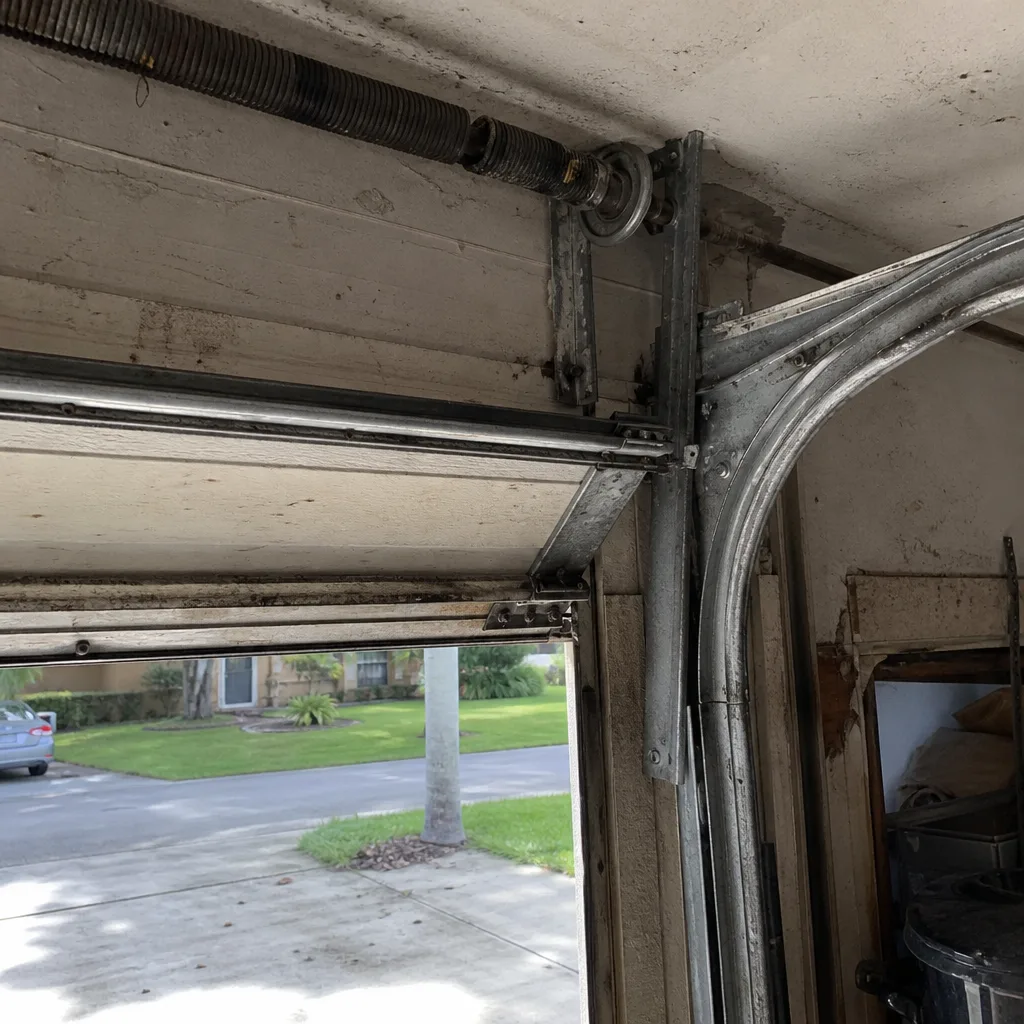
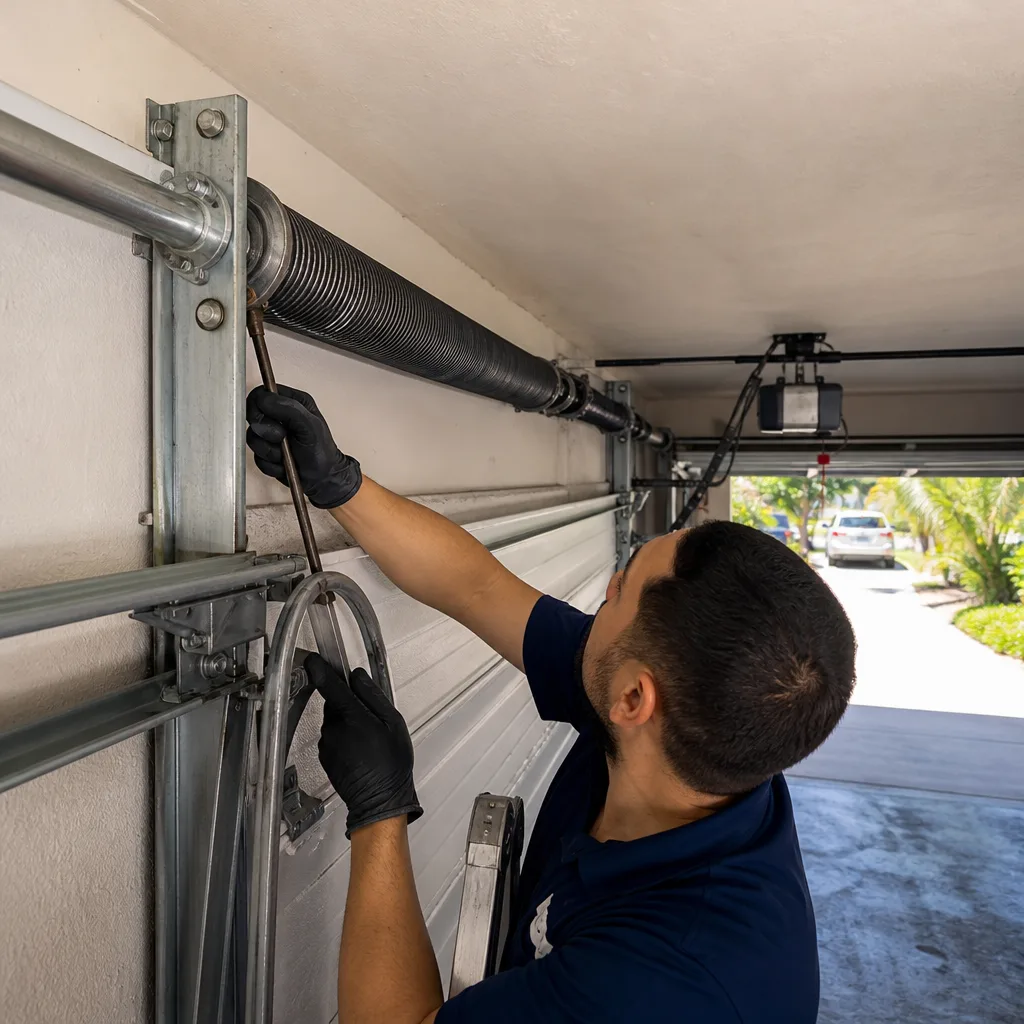
- Spring ends: The coils of a torsion spring can look fine while the ends, where the spring meets the stationary cone, are rusting. That’s where the stress concentrates and where Hollywood’s humidity does its worst work. We inspect the spring with the door down, so tension is visible but contained.
- Hinges and rollers: Look for rust on the hinge pins and hairline cracks where the hinge leaves meet the barrel. Rollers should spin freely on their bearings but not wobble on the stem. Wobble means the roller is wearing the track, and in Florida’s grit-and-salt environment, that wear accelerates.
If you find rust on any load-bearing component, that part is on its way out. Surface rust on a spring end is manageable in the short term, but rust on a bottom bracket is a replacement item. Do not try to wire-brush and reuse a corroded bottom bracket. If it fails, the door can drop suddenly and the cable can whip. Call for a professional replacement.
Step 3: Reading Spring Fatigue Before It Reads You
Extension and torsion springs don’t typically fail without warning in Hollywood’s climate. They fail after weeks or months of visible fatigue that most homeowners don’t know how to recognize. Learning the indicators—covered in our Garage Door Warning Signs: A Hollywood Homeowner’s Reference Guide—is the difference between a scheduled spring replacement and a door that crashes down at 7 a.m. on a workday.
Visual indicators of spring fatigue, in order of appearance:
- Gap in the spring coil: When a torsion spring starts to fatigue, the coils separate slightly. You’ll see a gap form between individual coils, usually near the center or at one end. On a healthy spring, coils sit tightly together.
- Uneven coil spacing: If the gaps appear on one side of the spring but not the other, the door is unbalanced and one side of the spring is holding more load than it should. This is a classic Hollywood problem, where salt corrosion weakens one end faster than the other.
- Rust streaks on the spring surface: Not surface rust, which is common, but streaks that follow the coil line and look like they’ve penetrated the metal. These are stress fractures beginning to open.
- Door sagging on one side: When the door is halfway open and one side hangs lower than the other, the springs are no longer providing equal lift. This is a late-stage symptom. If you see it, stop using the door and call for service.
Spring replacement is not a DIY job. The torsion spring assembly is under enough tension to cause serious injury or death if it releases while you’re working on it. Hollywood homeowners who notice any of these fatigue indicators should call a professional. We service springs on Genie, Clopay, Amarr, Wayne Dalton, and every other major brand installed across Broward County. The diagnosis is straightforward: we measure spring wire gauge, coil diameter, and cycle rating, then match the replacement to the door’s actual weight and usage. No guessing, no upsell to a new door because a spring is inconvenient to replace.
Step 4: The Hardware Tightening Pass
Garage doors move hundreds of times per month. Every cycle sends vibration through every bolt and hinge on the assembly. In a climate like Hollywood’s, where the wood or concrete the hardware is mounted to swells and contracts with humidity, the loosening happens faster than it does in drier regions. A quarterly tightening pass takes twenty minutes and prevents the gradual slop that turns into track wear and door misalignment.
What to tighten, and what to leave alone:
- Hinge bolts (tighten these): The bolts that attach hinges to the door sections work loose from continuous vibration. A socket wrench or an adjustable wrench is all you need. Go around the door and snug each hinge bolt, but don’t crank them down to the point of stripping the thread.
- Track brackets (tighten these): The L-shaped brackets that hold the vertical and horizontal track sections to the wall and ceiling. Loose track brackets cause the door to bind and the rollers to wear unevenly.
- Opener motor mount (tighten these): The mounting straps or brackets that hold the opener motor to the ceiling. A loose motor mount causes excess chain or belt vibration, which reads as a noisy door and shortens opener life.
- Spring anchor bolts (do NOT touch these): The bolts that hold the spring assembly to the spring pad or header are under constant tension. Do not attempt to tighten them. If a spring anchor bolt looks loose or the spring assembly is shifting, call a professional.
- Cable fasteners (do NOT touch these): The cable retaining bolts at the bottom brackets and the cable set screws on the drums hold the lift cables in place under load. These are not maintenance items. If you see a loose cable fastener, that’s a service call, not a DIY adjustment.
- Silicone-based spray lubricant: The best all-around product for hinges, rollers, and springs in a high-heat, high-humidity environment. It doesn’t break down at Florida summer temperatures and it doesn’t attract dust. White lithium grease is the second choice but holds more grit than silicone.
- Garage-door-specific lubricant (spray type): Products formulated for garage doors, like Genie’s screw-drive lubricant for screw-drive openers or a general-purpose door lubricant, work well. They’re designed to stay in place and resist washout.
- WD-40: As above, it’s a solvent that evaporates. It’ll quiet a squeak for a few days and then the squeak comes back, usually worse because the abrasives are now embedded.
- Heavy axle grease: It’s too viscose for roller bearings and hinge pins. It traps sand and salt from the air, especially in Hollywood’s coastal zones, and accelerates wear.
- Motor oil or household oil: These run in Florida heat, drip onto the door surface, and attract dirt. They also break down the nylon bushings in modern rollers.
- Hinge pins: a quick shot at each hinge pin, working top to bottom.
- Roller bearings: lubricate the bearing, not the roller face. The roller face should stay dry so it tracks cleanly.
- Torsion spring: a light coat along the full length of the spring coils. The lubricant works into the coil gaps and reduces friction between coils.
- Opener chain or screw drive: if your opener is chain-driven, lubricate the chain lightly. If it’s screw-driven, use a screw-drive-specific lubricant. Belt-drive openers need no lubrication.
- Reinforce the door sections: If your door doesn’t have hurricane bracing or a pressure rating, consider adding a retrofit bracing kit before the season starts. Hollywood’s building code requires new doors to meet wind-load standards, but many older homes don’t have those doors.
- Tighten every track bolt and bracket: Storm winds exert lateral pressure that routine use doesn’t. A track bracket that’s slightly loose in June is a failed door in September.
- Inspect the weatherstripping: Check the bottom seal and the weatherstripping around the door perimeter. Torn or missing seals let wind-driven rain enter, which soaks the interior of the door and accelerates corrosion from the inside out.
- Test the opener’s battery backup: If your opener has one. Power outages are common during storms, and a door that doesn’t open when you need to evacuate is a door that wasn’t maintained.
- Lubricate every pivot point: A freshly lubricated door operates more smoothly when you’re closing it up before a storm, which is exactly when you don’t want a sticky mechanism.
- Using WD-40 as a lubricant: We covered this above, but it’s worth repeating because it’s the single most common mistake in Hollywood garages. WD-40 dissolves rust, then evaporates. It doesn’t lubricate, and in Florida heat it fails fast.
- Skipping the auto-reverse test: Most homeowners test the door by opening and closing it, not by checking the safety system. The safety system is the part that protects people, and it’s the part that fails silently.
- Lubricating before inspecting: Lubricating a misaligned track or a failing roller just makes the problem quieter. The noise was the diagnosis. Treat the symptom and you lose the information.
- Ignoring visual rust on load-bearing parts: Rust on a bottom bracket or spring end is a time bomb. It’s not cosmetic. In Hollywood’s humidity, that rust is actively working through the metal.
- Adjusting the spring tension yourself: We’ve said it before and we’ll say it again: torsion springs hold enough energy to kill or maim. No YouTube video is worth that risk. Call a professional.
- Waiting until hurricane season to do the pre-season check: The pre-hurricane pass should happen in May, not September. By the time a storm is forecast, you’re in line behind every other homeowner in Hollywood. Do the prep before the season starts.
After tightening, cycle the door once and listen for changes. A door that was rattling should sound tighter. A door that suddenly sounds worse after tightening means you’ve introduced torque somewhere that was previously floating free. Back off the last fastener you touched and re-evaluate, or call for a professional set of eyes.
Step 5: Lubrication in a Florida Climate
Lubricating a garage door in Hollywood is not the same as lubricating one in Phoenix or Denver. Florida’s heat changes which products work and which ones make things worse. The most common mistake we see is homeowners reaching for the can of WD-40 on the garage shelf. Here’s why that’s a problem: WD-40 is a water-displacing solvent, not a lubricant. It’s designed to break up rust and drive out moisture, then evaporate. In Florida’s summer heat, it evaporates faster. What’s left is a thin film that attracts dust and grit, which turns into an abrasive paste inside the roller bearings and hinge pins.
What to use instead:
What to avoid:
Where to apply it:
Frequency matters in Hollywood’s climate. We recommend lubricating every three months, timed with the quarterly maintenance pass. Do it more often if you live within a mile of the Intracoastal or the beach, where salt aerosol is constant.
Step 6: The Pre-Hurricane Season Pass
Hollywood sits in one of the most hurricane-active zones in the state. Every May, before the Atlantic season starts, your garage door deserves a dedicated prep pass that goes beyond routine quarterly maintenance. A garage door is the largest opening in your home’s envelope, and if it fails during a storm, the wind pressure differential can lift the roof. That’s not hyperbole. It’s the documented failure mode for homes that lose their garage doors in hurricanes.
The pre-hurricane pass, in order:
This pass is separate from quarterly maintenance because the stakes are different. Routine maintenance keeps your door working. Hurricane-season maintenance keeps your house standing. We recommend scheduling it every May, and if you’re not sure whether your door meets current wind-load requirements for Hollywood, our Garage Door Installation in Hollywood team can assess it and quote a replacement or retrofit if needed.
Common Mistakes to Avoid
When to Call a Professional
Some garage door problems are maintenance items. Others are repair calls, and knowing the difference saves you money in the long run. Call a professional if you see a gap in a torsion spring coil, rust through a bottom bracket, a snapped or frayed cable, or a door that hangs unevenly. Call if the door reverses for no reason, or doesn’t reverse when it should. Call if the opener makes a grinding noise or the motor runs but the door doesn’t move. These are not maintenance problems. They’re failures waiting to happen. Garage Door Repair in Hollywood is what we do. If the problem is in the opener itself, our Garage Door Opener Repair in Hollywood team handles the mechanical side and the smart-tech side. Benchmark Garage Door Repair offers free estimates in Hollywood, and we’ll give you an honest diagnosis with a price quoted and agreed before any work starts. Call (833) 589-8332.
See the difference
 Before
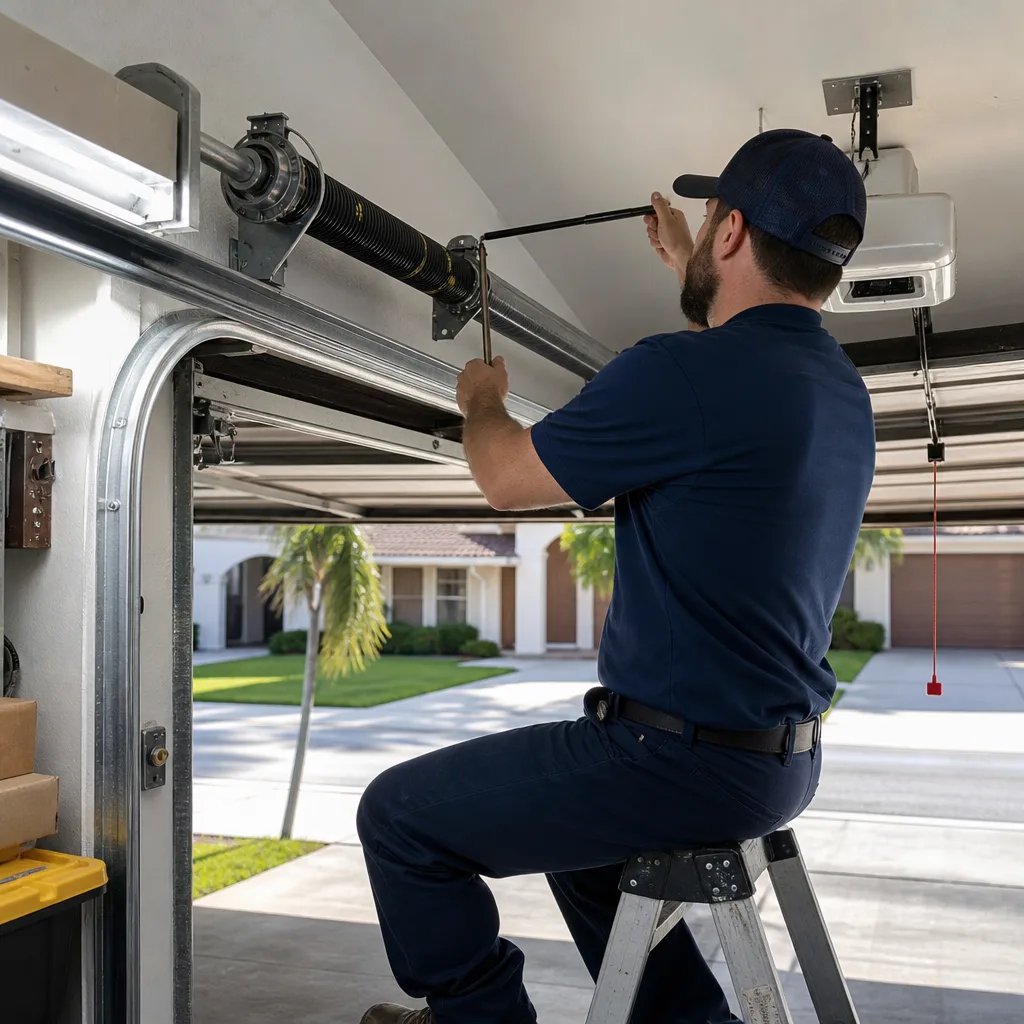 After
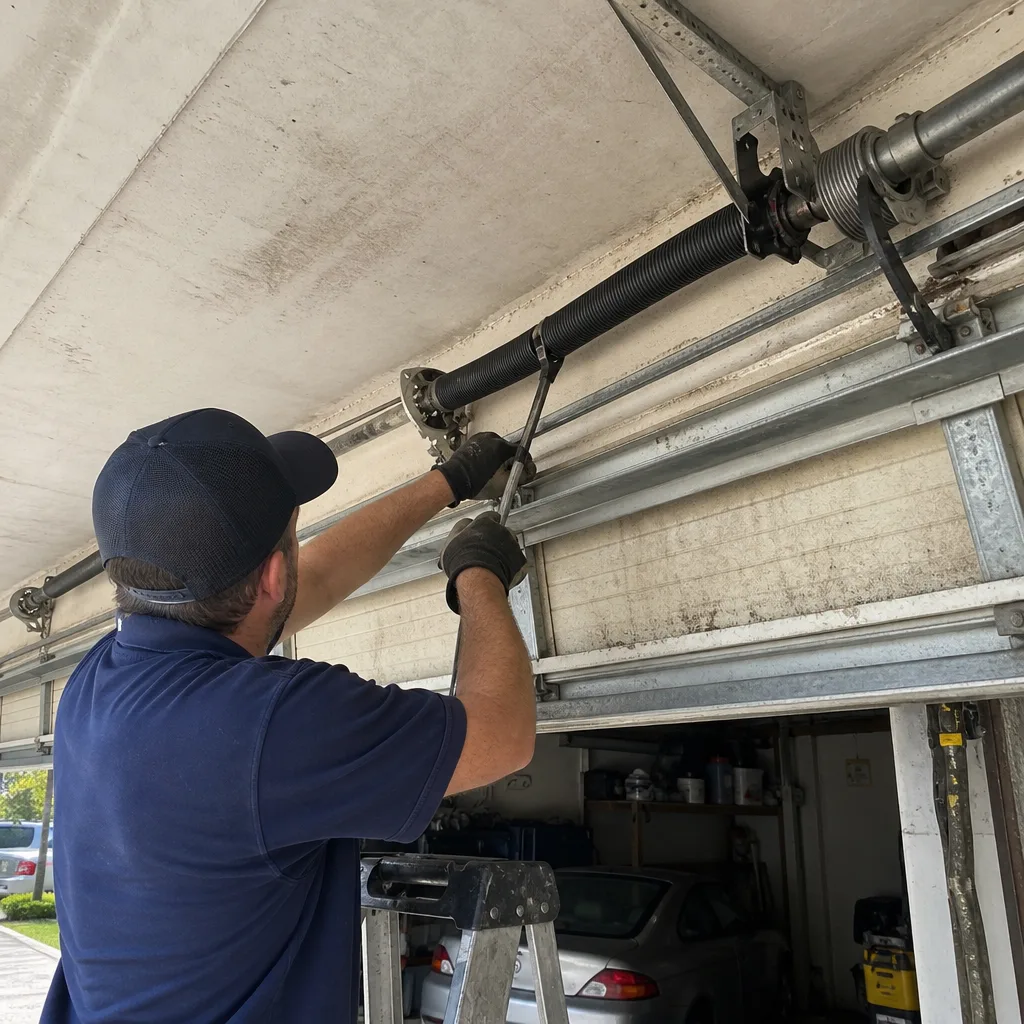 Before
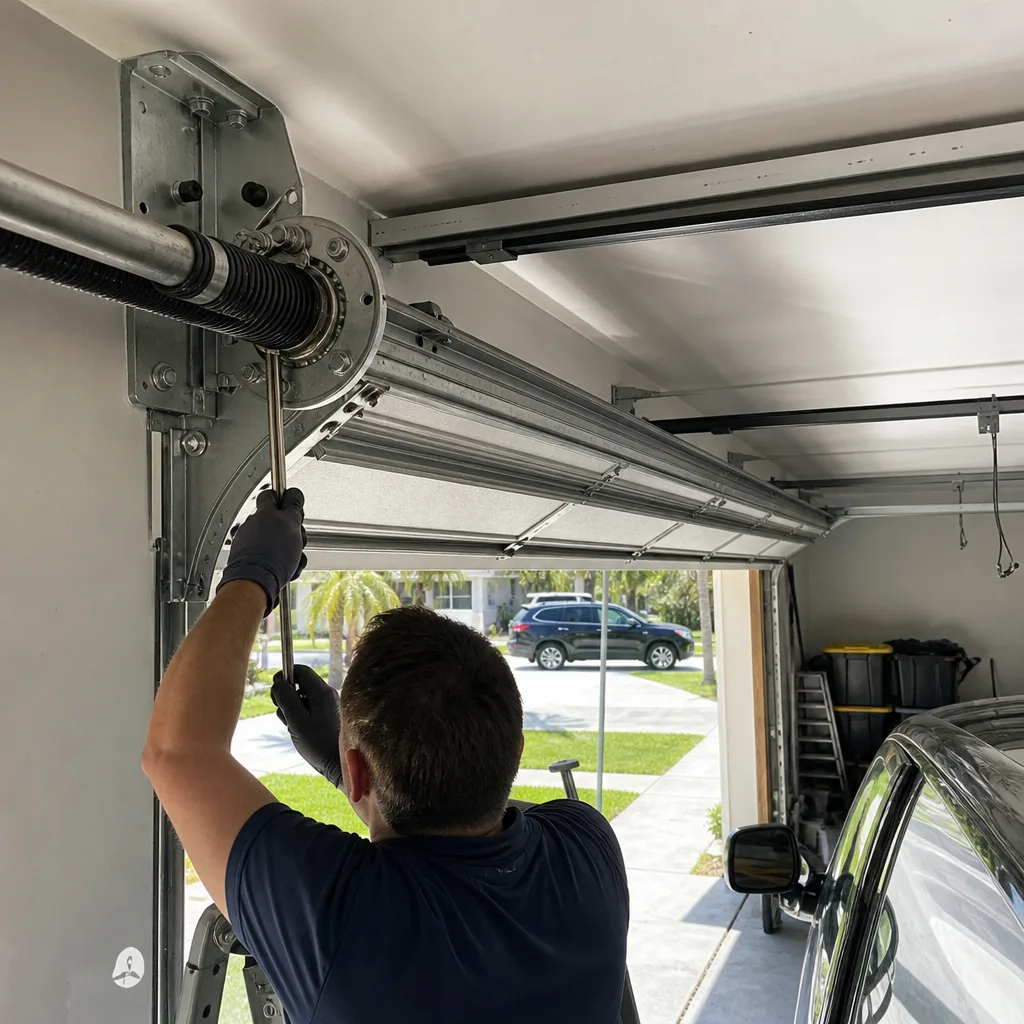 After
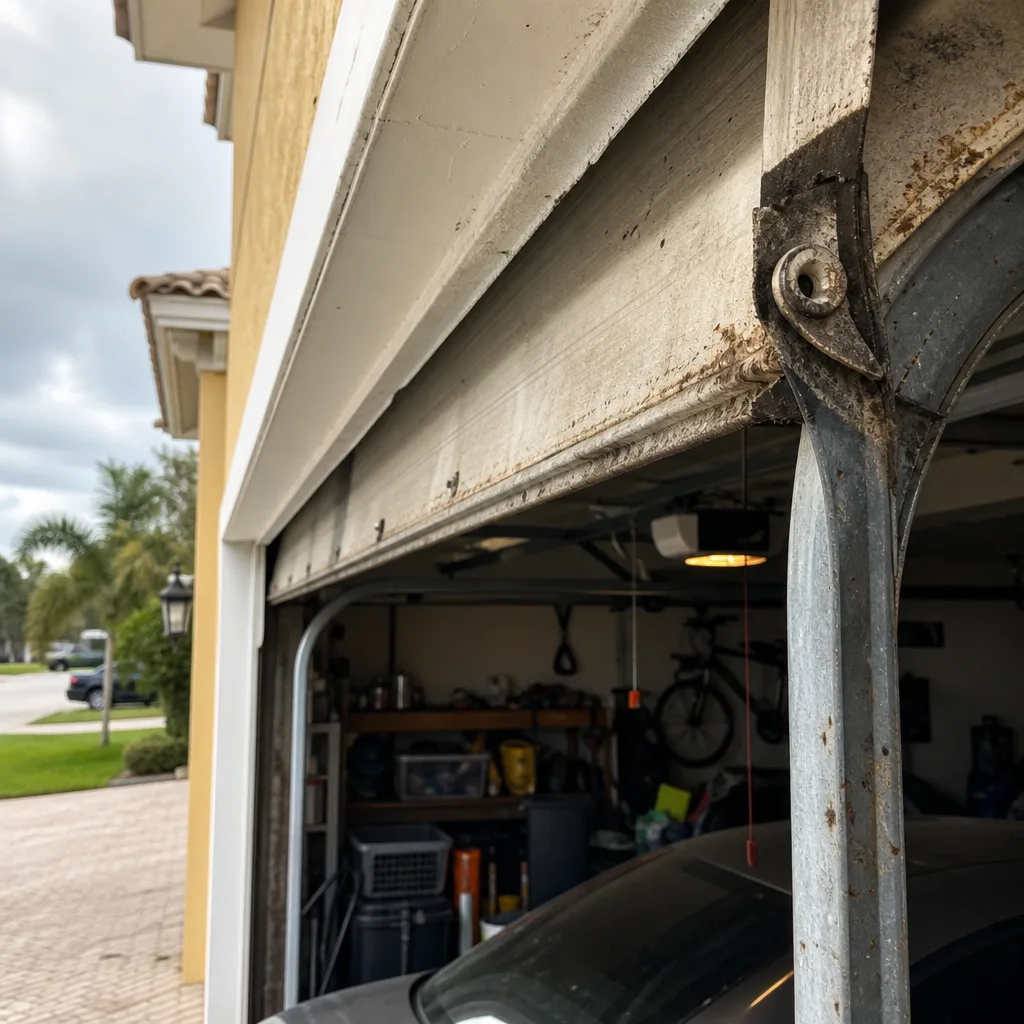 Before
 After
Frequently Asked Questions
Every three months for routine maintenance, with a dedicated pre-hurricane pass in May before the Atlantic season starts. Hollywood’s humidity and salt air accelerate corrosion, so quarterly is the minimum if you want to catch problems before they fail.
The auto-reverse system, because it’s the only component that protects people, and because it fails silently. Test it every quarter with a 2×4 placed flat in the door’s path. If the door doesn’t reverse within two seconds of contact, call for service.
No. WD-40 is a solvent, not a lubricant. It dissolves rust and then evaporates, which is worse in Hollywood’s summer heat because it evaporates faster. Use a silicone-based spray lubricant or a garage-door-specific product instead.
Look for visual indicators: gaps between spring coils, uneven coil spacing, rust streaks that follow the coil line, or a door that sags on one side when it’s halfway open. Any of these means the spring is fatiguing and should be inspected by a professional.
Yes. The torsion spring assembly holds enough tension to cause serious injury or death if it releases while you’re working on it. Safety testing, hardware inspection, and lubrication are DIY-friendly. Spring adjustment, cable work, and anything that involves the spring assembly should be handled by a trained technician.
Yes. If you’re within a mile of the Intracoastal or the ocean, the salt aerosol is constant and the corrosion rate is higher. Lubricate every two months instead of three, and inspect the bottom brackets and cable drums more frequently. Salt air works fast on that exposed hardware.
The Bottom Line
Garage door maintenance in Hollywood is a sequence, not a list. Test safety systems first, inspect corrosion points second, tighten third, lubricate fourth. Do it quarterly, add a pre-hurricane pass every May, and use the right products for a Florida climate. For more guides & resources, visit our blog. Most importantly, know the line between maintenance and repair. Springs, cables, and corroded brackets are professional work. If you see the warning signs, don’t wait. Call Benchmark Garage Door Repair at (833) 589-8332 for a free estimate. We service what you already have, from a broken spring to a brand-new door, and we diagnose to a standard before we recommend anything. That’s the way it should work.
Written by the team at Benchmark Garage Door Repair, serving Hollywood since 2011.