Last updated October 30, 2026
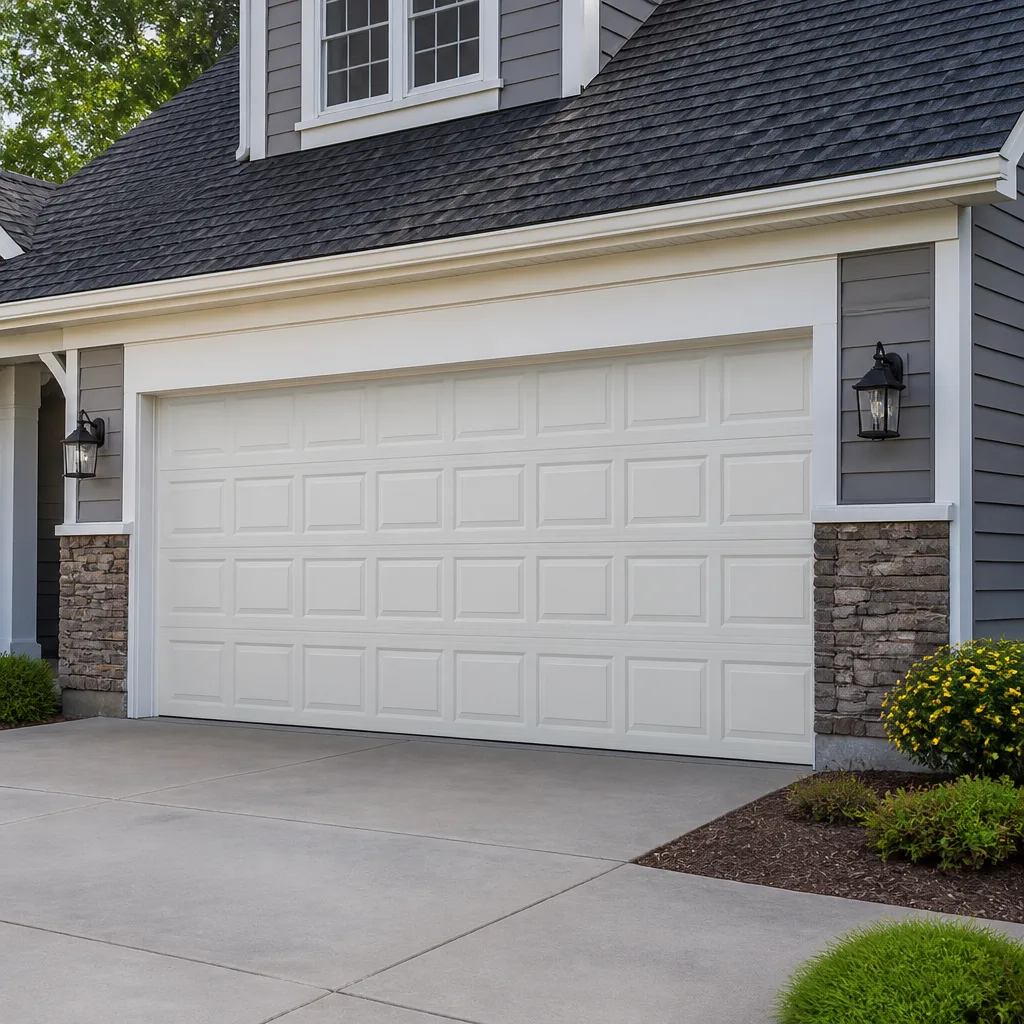 Raised-panel steel
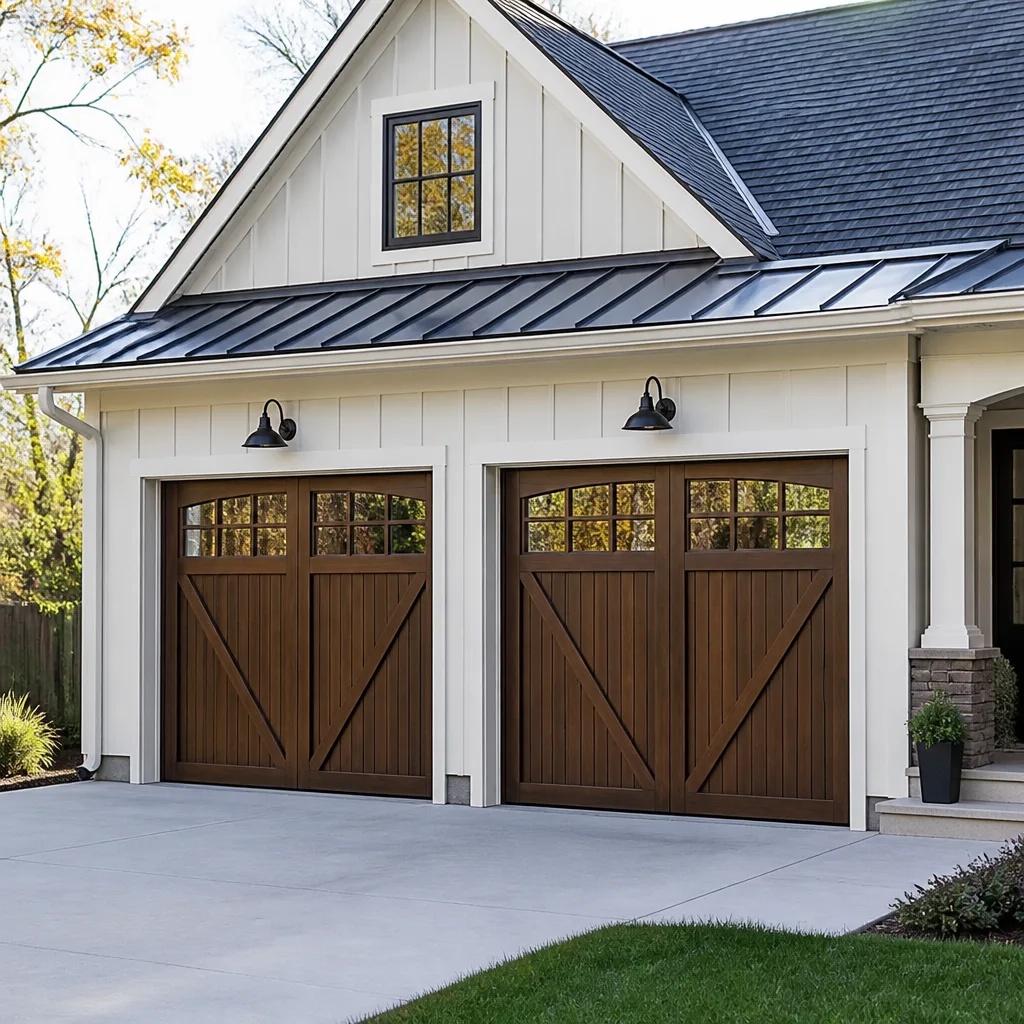 Carriage house
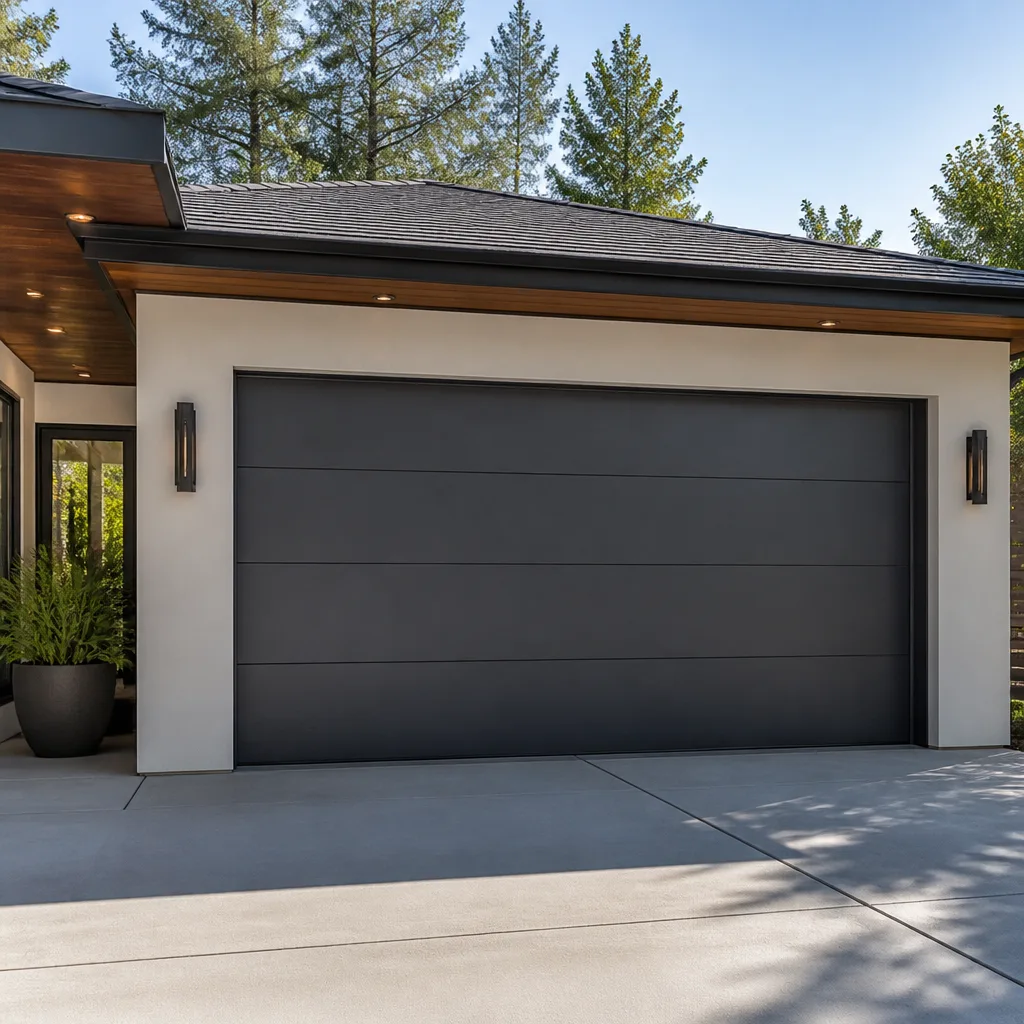 Modern flush
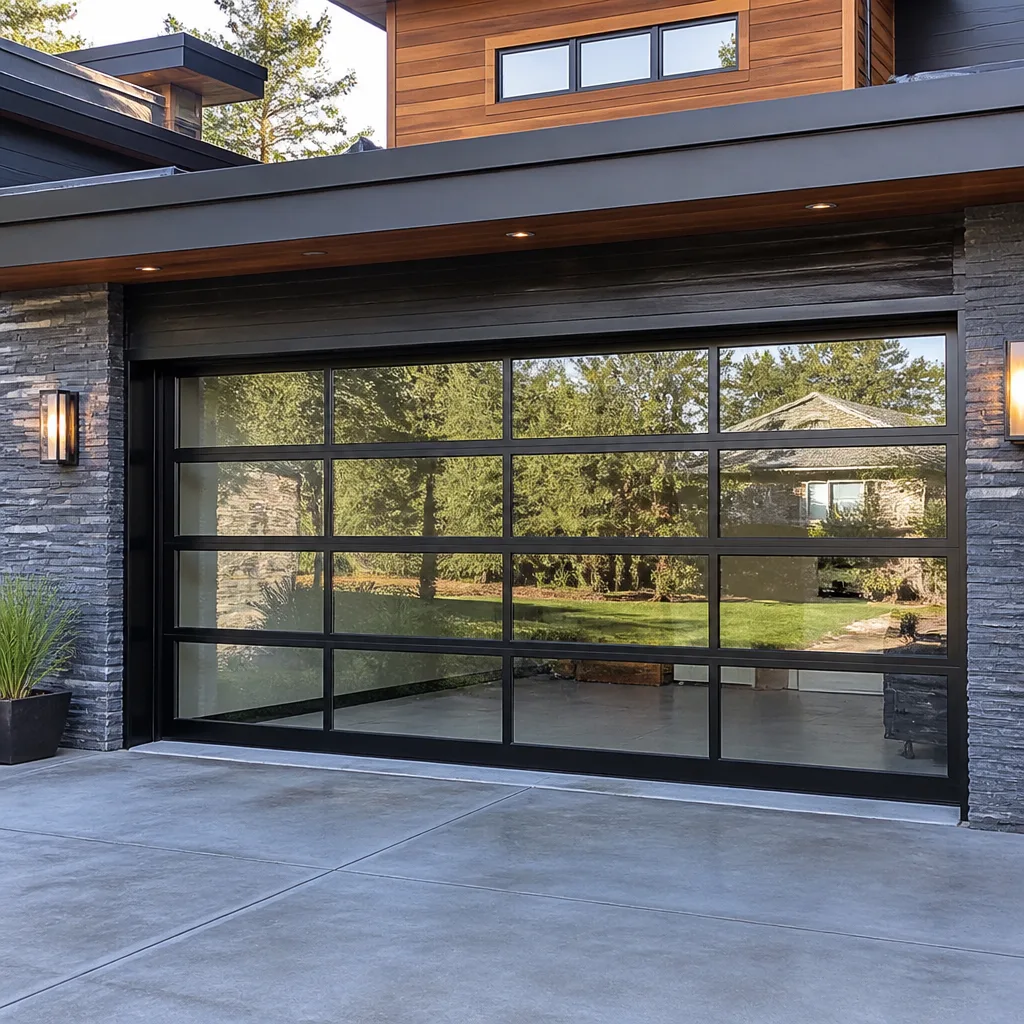 Full-view glass
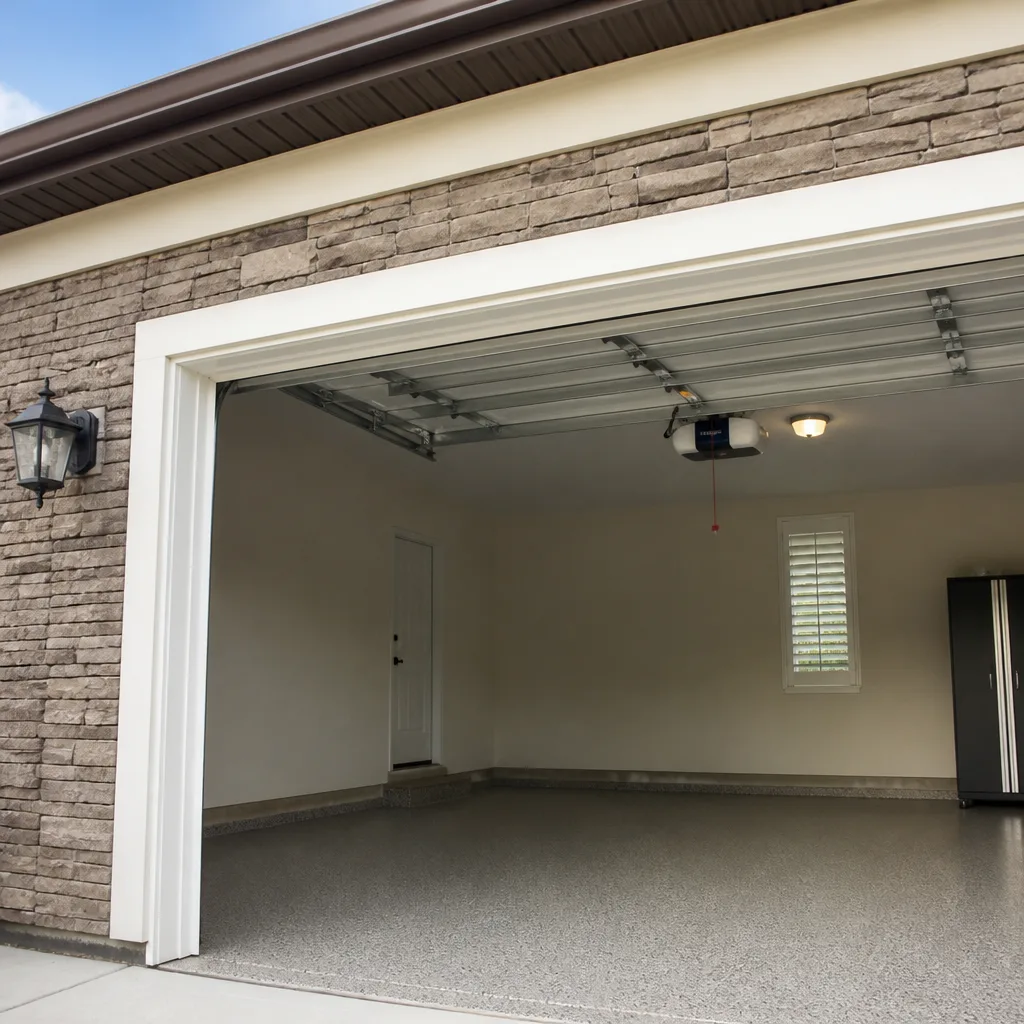 LiftMaster openers
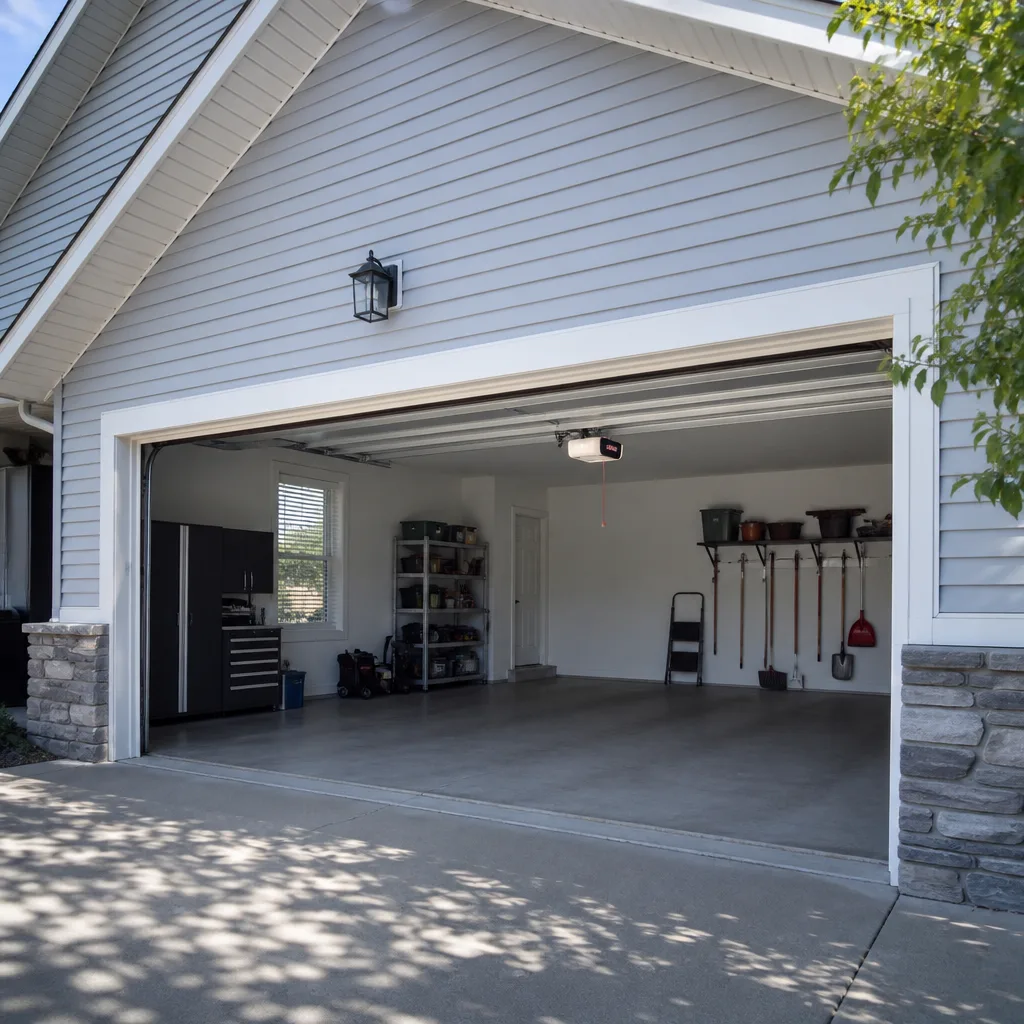 Chamberlain openers
Full 25-point door and opener safety check with every visit - springs, cables, rollers, tracks, and your LiftMaster or Chamberlain opener included
You get a price before we start. It does not change when the truck arrives.
Get your free estimateGarage Door Warning Signs: A Hollywood Homeowner’s Reference Guide
A garage door that “just seems slow” is communicating one of four distinct mechanical problems, and three of them get significantly worse if you keep operating the door. In Hollywood, where salt air accelerates wear on springs, cables, and rollers, ignoring these signals costs homeowners more than anywhere inland. This guide connects each observable symptom to the specific component failure behind it, so you know exactly what conversation to have with a technician before you pick up the phone. You’ll learn how to read your door the way a trained eye does, distinguish an opener problem from a mechanical problem without touching a tool, and spot the coastal corrosion markers that signal failure before the loud, expensive break happens.
Quick Answer
The warning signs that matter most on a Hollywood garage door are unusual sounds (grinding, popping, squealing, banging), visible wear on springs and cables, uneven movement where one side lags, and corrosion on coastal-exposed hardware. Each symptom points to a specific component: grinding means worn rollers or bearings, popping is almost always a spring, banging is a loose or bent track, and uneven lift is a spring or cable imbalance. If your door shakes, sounds different than it did a month ago, or moves unevenly, stop operating it and call a professional who works on all major brands, not just one product line. See our guide on How to Hire a Garage Door Contractor in Hollywood: A Step-by-Step Guide for what to ask before you call.
Styles & brands we work with
Table of Contents
- What Different Garage Door Sounds Actually Mean
- Spring and Cable Warning Signs: Imminent Failure vs. Normal Wear
- Opener Problem or Door Problem: How to Tell Without Tools
- Uneven Movement: Why One Side Slower Than the Other Is a Red Flag
- Coastal Corrosion: Hollywood-Specific Warning Signs on Hardware
- A 5-Point Visual Inspection You Can Do in Under 10 Minutes
- When to Call a Professional
What Different Garage Door Sounds Actually Mean
Sound is the most reliable diagnostic tool a garage door gives you, and most Hollywood homeowners hear the difference long before they see it. Each distinct noise maps to a specific component failure. Treating them all as “the door is loud” wastes the one clear signal you have and often leads to replacing the wrong part.
Here’s what each noise indicates when it happens during normal operation:
- Grinding or metal-on-metal scraping: This points to worn rollers or failing bearings. Rollers are the small wheels that carry the door along the track, and once their internal bearings wear out, the roller stops spinning and starts dragging. In Hollywood’s humidity, roller bearings rust from the inside out. You’ll hear it most when the door passes the curved portion of the track. Left alone, a seized roller can carve a groove into the track itself, turning a $30 part into a track replacement.
- A sharp pop or snap: That’s a torsion spring letting go. Torsion springs sit above the door and hold the counterbalance tension that makes a 150-pound door feel light. When one breaks, the sound is often mistaken for a gunshot or a car backfiring. If you hear this and then find the door suddenly impossible to lift by hand, that spring is done. Do not try to operate the door with the opener after a spring breaks; the motor isn’t built to lift the full weight alone, and you’ll burn it out for no reason.
- Squealing or high-pitched shrieking: This is usually friction between a metal roller stem and a dry metal hinge, or a roller that’s spinning against its own rust. A quick lubrication with a silicone spray on the roller stems and hinge pins often resolves it. If the squeal persists after lubrication, the roller itself has failed internally and needs replacing, not more spray.
- Banging or slamming at the endpoints: When the door hits the top or bottom of its travel with a thud, the travel limits on the opener are set too far, or the door’s balance has shifted so the opener is working harder than it should. With a LiftMaster or Chamberlain opener, the limit settings are adjustable, but when a door that used to close gently starts slamming, the more common cause in Hollywood is a spring that’s losing tension and letting the door drop faster than the opener expects.
In our experience across Hollywood’s neighborhoods, from Hollywood Lakes to Emerald Hills, the grinding sound is the most commonly ignored. Homeowners turn up the radio in the car or get used to the noise over months. By the time we’re called, the roller has often damaged the track or the hinge plate. If the sound is new, call it in before it becomes a track job. The Garage Door Repair in Hollywood service call costs less than the track it could damage.
Spring and Cable Warning Signs: Imminent Failure vs. Normal Wear
Springs and cables work as a pair: the springs store the lifting energy, and the cables transfer that force to the bottom of the door. They’re both under constant, dangerous tension, and they degrade at different rates in Hollywood’s salt-heavy air. A torsion spring rated for 10,000 cycles will last fewer cycles a mile from the Intracoastal than it will in inland Broward. That’s not a guess; it’s what the corrosion pattern shows.
Here’s how to tell the difference between normal wear and imminent failure:
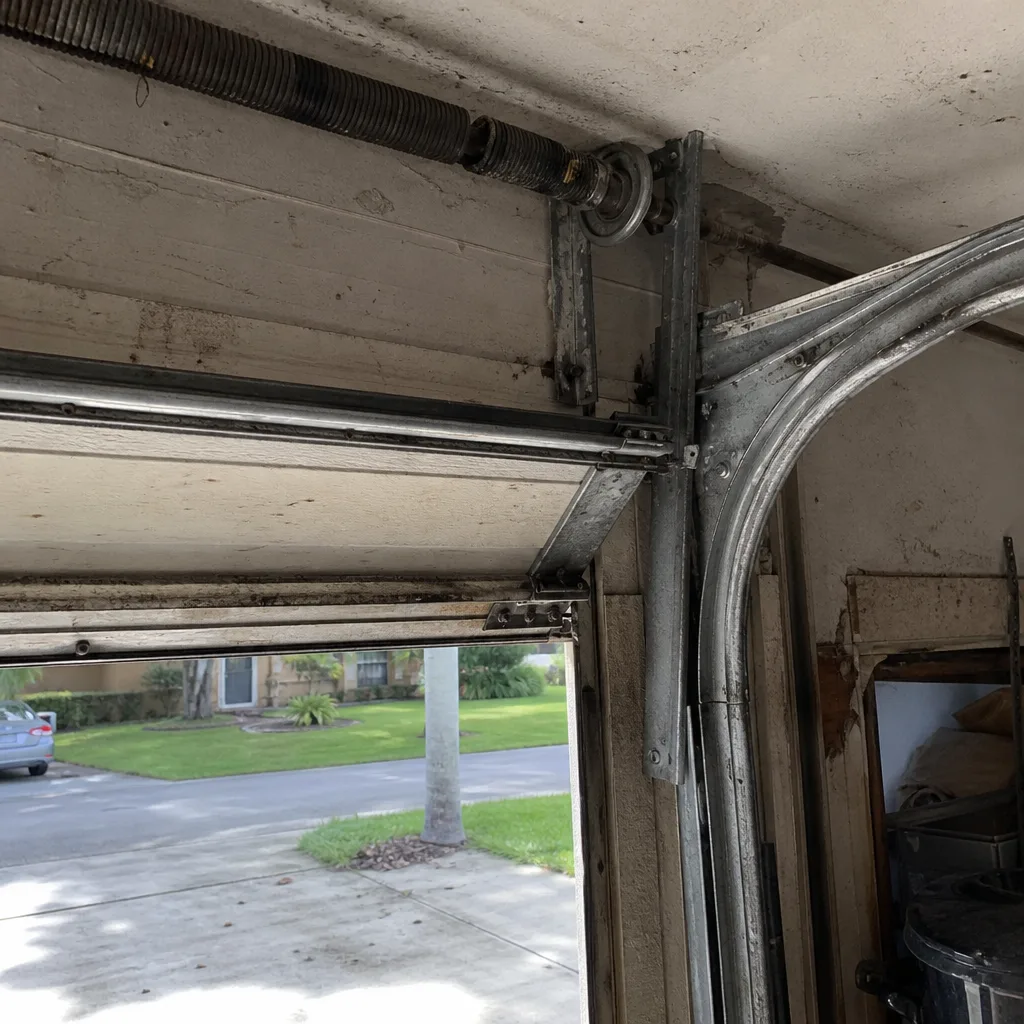
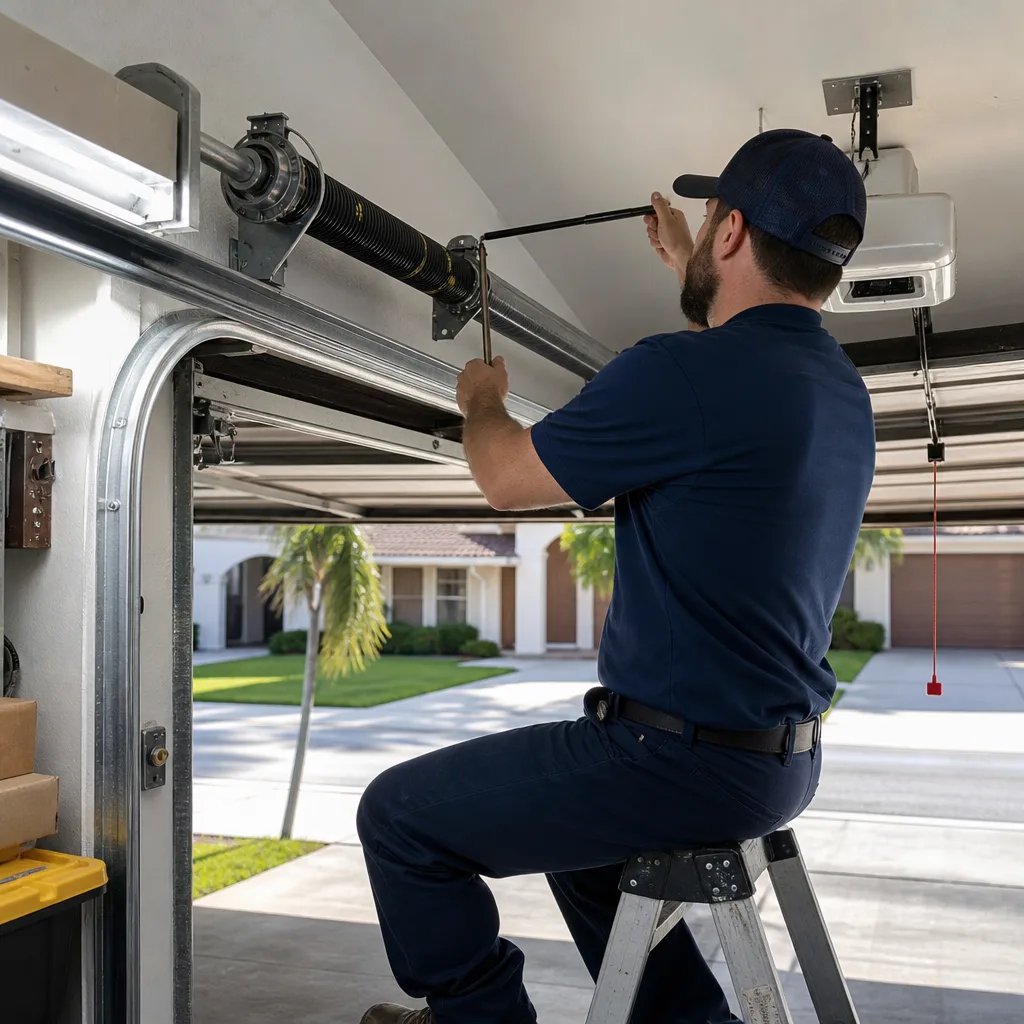
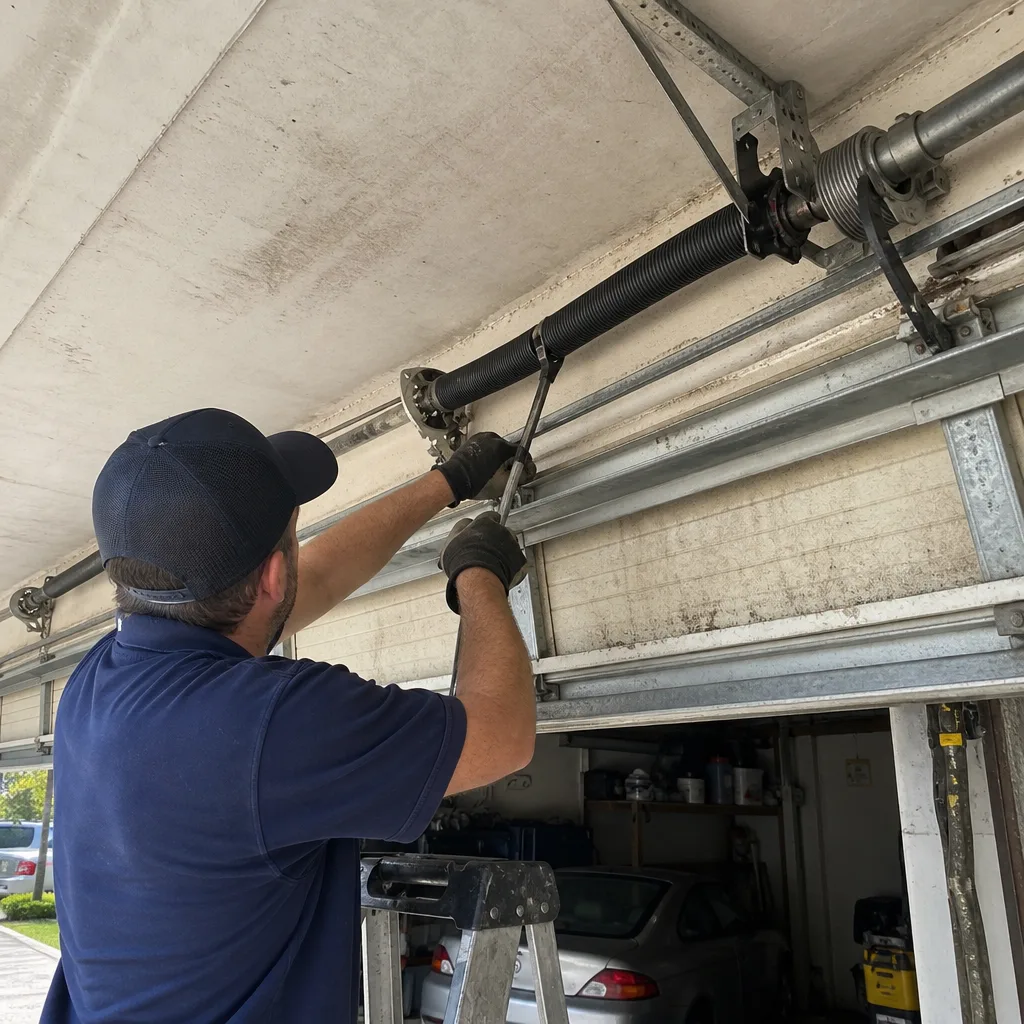
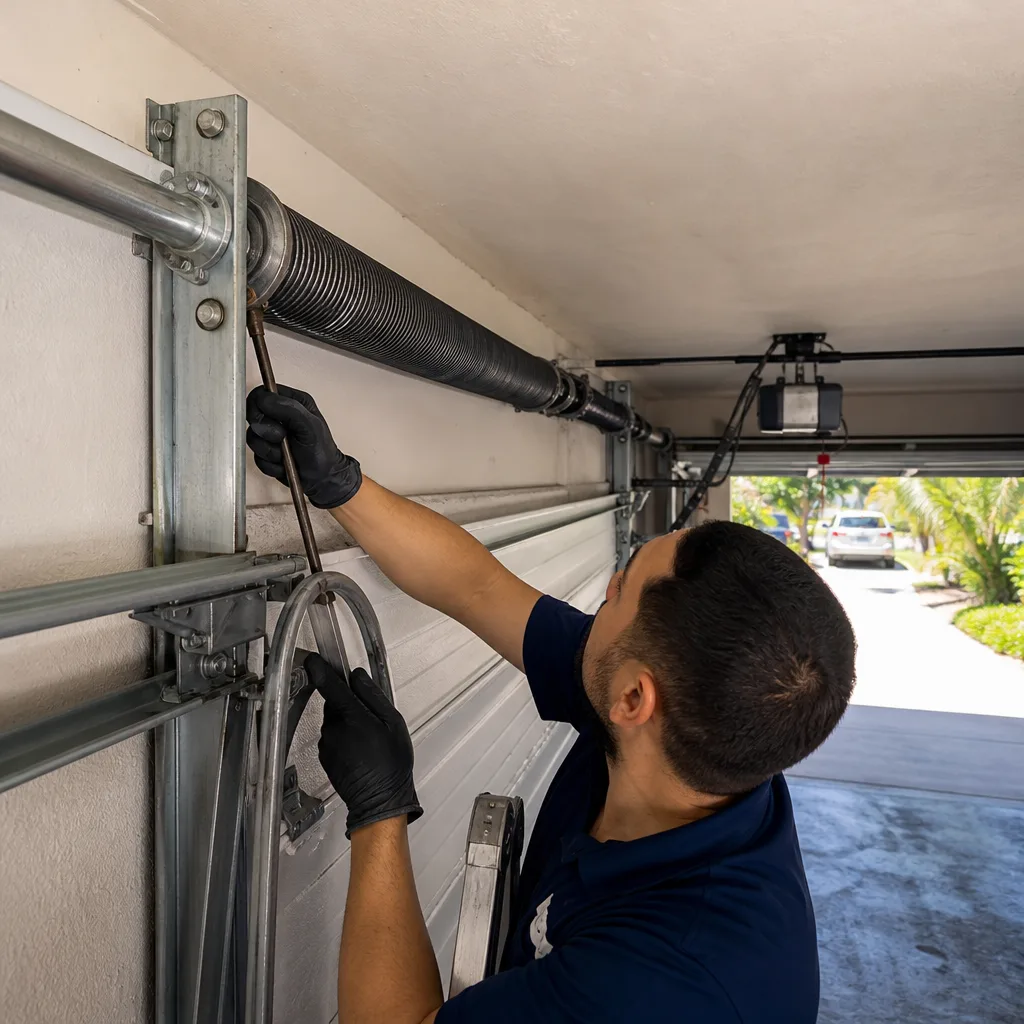
- Look at the spring gap. A torsion spring runs across the bar above the door, usually in two sections with a center bracket between them. In a healthy spring, the coils sit tight against each other with only a hair’s-width gap. If you see a visible separation where one section of coils has stretched apart, that spring has fatigued and is nearing the end of its life. In Hollywood, this stretch often happens unevenly; the side facing the garage’s salt breeze rusts first and stretches first.
- Check for rust staining on the coils. Light surface rust on a five-year-old spring is normal coastal wear. But if the rust has pitted the metal or you see flaking, the spring’s diameter has thinned and its lifting force has dropped. A thinned spring still looks spring-shaped, but it lifts less weight than it did. Your opener compensates until the spring snaps entirely.
- Inspect the cable where it meets the bottom roller bracket. Cables in Hollywood fail from the bottom up because that’s where salt spray and driveway rinse-off collect. Look for frayed strands, a kink, or a rusty pinch where the cable loops through the bracket. One broken strand is a warning; a dozen broken strands is an emergency. A cable that fails mid-lift turns the door into an unbalanced slab that can drop with force on whatever is underneath it.
- Note any slack in the cable. When the door is fully open, the lifting cables should be taut. If one cable is slack while the other is tight, that’s a spring that’s lost tension on one side or a cable that’s jumped its pulley. Do not try to re-seat a cable yourself. The spring tension behind it can break bones.
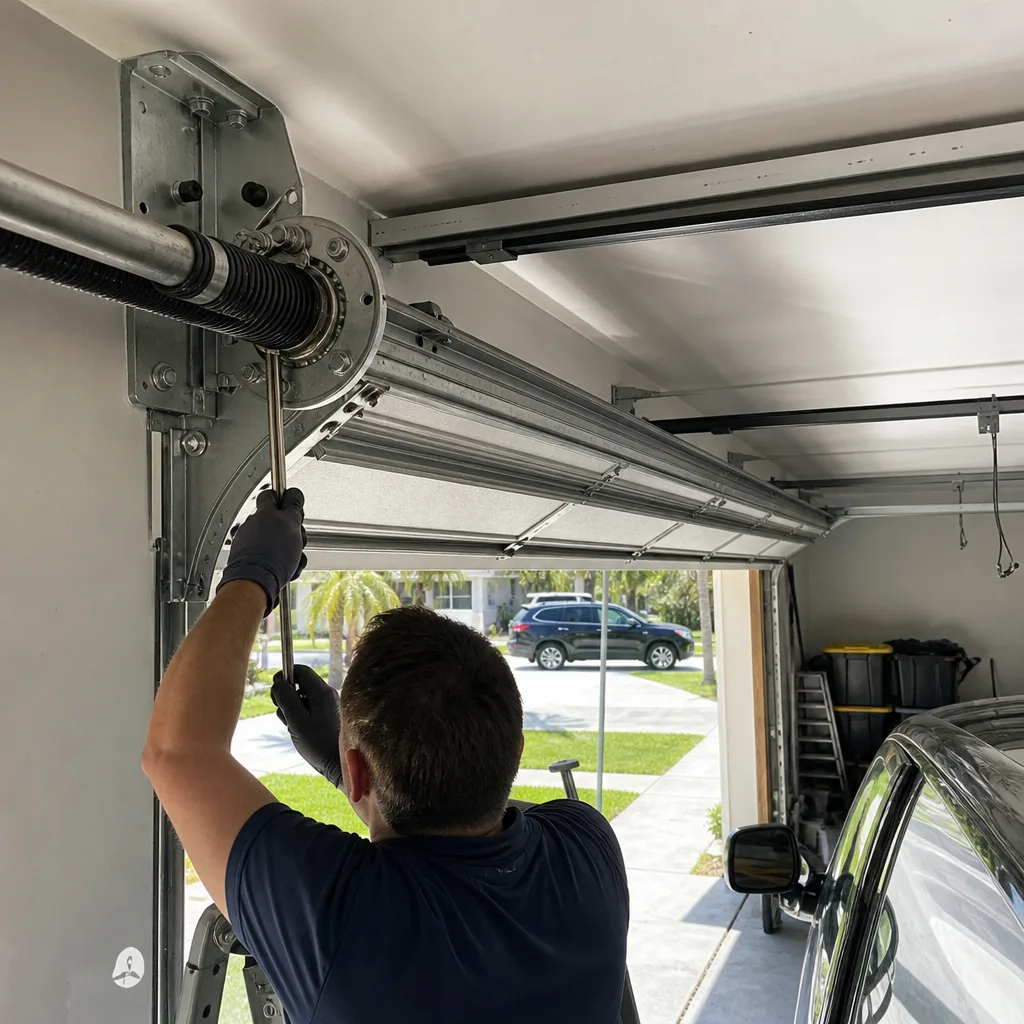
Spring replacement is not a DIY job, and it’s one area where we’re direct with Hollywood homeowners: the tension in a wound torsion spring can exceed 200 pounds per square inch. A 12-inch pry bar in the wrong place becomes a projectile. This is exactly the kind of repair where calling a trained professional is the only sensible option. If you notice any of the above, stop the door’s cycle, unplug the opener, and call a company that services whatever spring system is already installed. We work on springs for Raynor, Clopay, Amarr, Wayne Dalton, and every other major manufacturer in the area, so there’s no “wrong brand” to call about. If you’re considering a full replacement, read our Choosing the Right Garage Door Brand: A Buyer’s Guide for Hollywood first.
Opener Problem or Door Problem: How to Tell Without Tools
The most useful diagnostic split a homeowner can make is deciding whether the problem lives in the opener motor or in the door’s mechanical system. Here’s why it matters: an opener repair is often a board, a gear, or a sensor fix; a door problem is a spring, cable, or track repair. Different work, different cost, different urgency. No tools required for this test.
Follow these four steps:
- Pull the red emergency release handle. That’s the cord with a red grip hanging from the trolley or opener rail. This disconnects the door from the opener carriage. The door is now operating manually.
- Lift the door by hand using the handle or the bottom edge. A balanced door should move smoothly, stay put at waist height, and feel light (roughly 8 to 12 pounds of lifting effort on a two-car door). If it’s heavy, jerky, stiff, or drops when you let go, the problem is in the door’s mechanical system (spring, cable, roller, or track). The opener is fine; it’s just been fighting a door it was never meant to lift unaided.
- Re-engage the opener and run a full cycle. If the door operates normally with the opener but felt bad by hand, you’ve learned something valuable: the opener was masking a spring that’s losing tension. Modern LiftMaster and Chamberlain openers have force-sensing technology that ramps up motor effort to compensate for a weakening spring. The opener isn’t failing; it’s working overtime and wearing itself out faster.
- If the door moved fine by hand but misbehaves on the opener, the problem is in the opener itself: the logic board, the travel module, the RPM sensor, or the safety eyes. This is where Garage Door Opener Repair in Hollywood becomes its own job, not a side note to a door repair.
We’ve seen this test save Hollywood homeowners hundreds of dollars. One call we took in the Driftwood area involved a door that wouldn’t open more than two feet. The owner had been quoted a full opener replacement by another company. The emergency release test revealed a door so heavy it took both hands to lift; the spring had sheared in two and the opener’s force limiter was doing exactly what it was designed to do. A $300 spring replacement solved it. The opener was fine.
Genie openers, like LiftMaster and Chamberlain, all have this force-sensing logic built in. None of them are meant to lift an unbalanced door. If you’re unsure after the test, a trained eye can confirm it in under ten minutes at your Hollywood home.
Uneven Movement: Why One Side Slower Than the Other Is a Red Flag
A garage door should rise and lower as one flat plane. If the left side of the door lags a half-second behind the right, or the door appears tilted as it moves, you’re looking at a spring or cable imbalance. This never fixes itself, and in Hollywood’s salt air it escalates from a $100 adjustment to a full spring replacement within months.
The mechanism is simple to understand. A standard two-car door uses two torsion springs (or one longer spring) to distribute lifting force evenly across the door’s width. The cables run down both sides and connect that force to the bottom corners. When one spring loses tension faster than the other, either through uneven corrosion or a broken coil, the door’s lift force becomes asymmetric. One side rises with proper spring assist; the other side is dead weight. The opener’s J-arm connects in the center, so the motor keeps pulling from the middle while one side of the door lags behind. Over weeks, that twist force bends the top section, warps the vertical track, and strips the gears inside the opener.
Uneven movement shows up in three observable ways:
- A visible tilt during travel: Watch the door from inside the garage as it opens. One corner reaches the top before the other. That’s the classic spring or cable imbalance.
- A jerky, start-stop motion: The door moves up, pauses briefly, then continues. That pause is the door binding on one side while the opener pushes through the resistance.
- A gap at the bottom when closed: The door sits squarely in the opening when closed, but you can see daylight under one corner. Over time, an imbalanced door can literally pull itself out of square, and the sections separate at the hinge line.
The fix depends on how far the imbalance has progressed. If caught early, a spring re-tension or a single spring replacement restores balance. If the door has been running uneven for months, the top panel may have a permanent bow, and you’re looking at panel replacement or a full door. The way to avoid that upgrade is to call the moment you notice the lag. We’d rather re-tension a spring than measure a new door for a Hollywood garage, and the economics work in your favor too.
Coastal Corrosion: Hollywood-Specific Warning Signs on Hardware
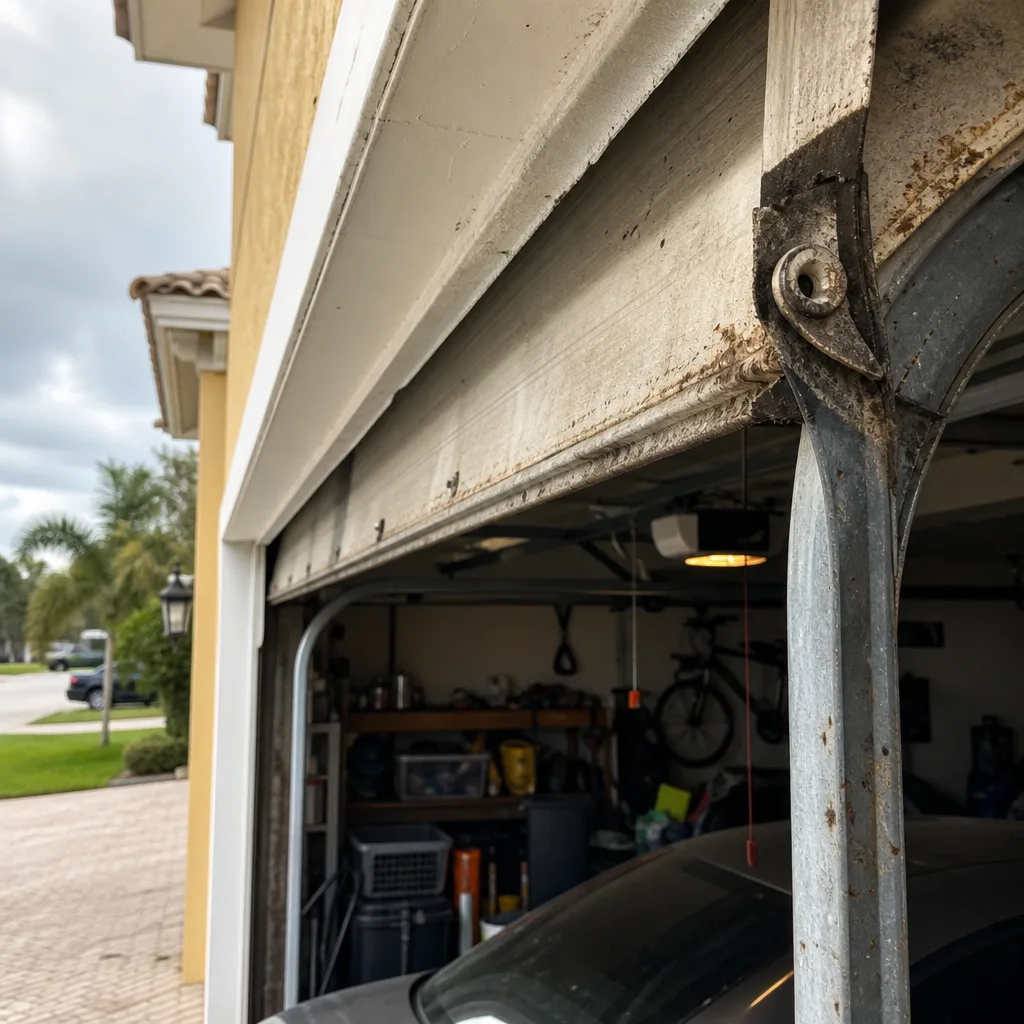
Hollywood sits close enough to the Atlantic that every metal component on a garage door faces a corrosion load that inland Broward homes don’t experience. The salt layer settles on springs, cables, hinges, and rollers, then the humidity keeps it damp, and the electrochemical reaction starts. The warning signs look different from normal wear, and picking them out early is the single biggest cost saver available to a Hollywood homeowner.
Here’s what we look for in a Hollywood-specific corrosion inspection:
- White, crusty deposits on the torsion spring coils: This is zinc oxide, the byproduct of the spring’s protective galvanized coating doing its job and sacrificing itself. A light white powder on a two-year-old spring is normal. But when the powder becomes a rough, chalky crust with visible pitting underneath, the coating is gone and the steel is rusting structurally. The spring still has tension; it’s just running on borrowed time.
- Rust blooms around the bottom roller brackets: The bottom brackets are the lowest point on the door’s hardware, and they catch the splash from Florida’s afternoon downpours plus the salt that’s settled on the driveway. A rust bloom here doesn’t necessarily mean replacement; it means the bolt and the bracket should be inspected for pitting. If the bracket has lost metal thickness, it becomes the failure point when the spring tension peaks.
- Green or brown streaking on cables: Lift cables are typically galvanized steel. When they begin to fail in coastal conditions, they show it as dark streaking, not just surface rust. A cable with a greenish patina has lost its protective layer and is actively corroding. If you can see individual strands separating or a birdcage effect at the loop end, the cable is done. Do not operate the door.
- Frozen hinge pins and sticky roller stems: Hinges and rollers have small clearances where salt and moisture collect. The first sign is usually a creaking or groaning sound when the door moves through a specific section. If left untreated, the hinge pin seizes, and then the door section it connects to stops flexing properly. A seized hinge on a sectional door can crack the panel at the hinge line, which is not a cheap fix.
Prevention for Hollywood garages is a twice-yearly rinse of the moving hardware with fresh water, followed by a silicone-based lubricant on rollers, hinges, and springs. For a complete schedule, see our Seasonal Garage Door Care for Hollywood: Year-Round Homeowner’s Guide. Avoid WD-40 for this job; it’s a water displacer, not a lasting lubricant, and it leaves a film that attracts salt dust. A light coat of lithium grease on the torsion spring coils does more for coastal longevity than any desiccant product. If the corrosion has already set in past surface level, call for a hands-on inspection before the next hurricane season adds wind load to a weakened system.
A 5-Point Visual Inspection You Can Do in Under 10 Minutes
Do this inspection twice a year in Hollywood, once in May before the summer storm season and once in late October before the winter dry stretch. It takes under ten minutes and catches the big-ticket failures while they’re still cheap parts.
- Run the door through a full cycle and watch the track alignment. Stand inside the garage with the door halfway up. The gap between the door edge and the vertical track should be even on both sides, roughly 1/4 to 1/2 inch. If one side is tighter or the door rubs the track, note which section and which side. That’s a roller, bracket, or alignment issue forming.
- Check the torsion springs for the signs above. Look for a stretched gap, heavy rust pitting, white crusting, or an uneven wear pattern between the two springs. If anything looks off, close the door and leave it closed until a pro has looked at it.
- Inspect the lift cables at the bottom brackets. Look for fraying, kinking, green staining, or slack. Run a finger down the cable with the door closed, not open, so there’s no tension on the line. A snag or a strand poking out is a stop-and-call sign.
- Test the balance using the emergency release. With the door closed, pull the red release and lift by hand. It should feel light and stay open at the halfway point without dropping or creeping up. If it’s heavy or it drops, the springs are losing tension. Re-engage the release by pulling the handle toward the door until you hear a click.
- Look at the bottom seal and the panel seams. The rubber weatherstrip along the bottom of the door collects Hollywood’s moisture and grit. If it’s cracked, missing chunks, or pulling away from the metal retainer, water and salt are getting under the door and onto the bottom panel. Seal replacement is a $40 job; a rusted bottom panel is a $400 one.
If any of these five points raises a flag, the Garage Door Installation in Hollywood team can assess whether it’s a repair job or a replacement conversation. Not every flag means a new door. Most don’t. But the difference between a roller swap and a full re-install is often just the time the warning was allowed to sit.
See the difference
 Before
 After
 Before
 After
 Before
 After
Common Mistakes to Avoid
- Lubricating a failing part instead of replacing it. Spraying a seized roller with silicone lube quiets the squeak for a week, but the bearing inside is gone. The roller keeps grinding, the track keeps wearing, and the bill keeps climbing. If the noise comes back after one lubrication, the part is done.
- Continuing to run the opener when the door is heavy after a spring break. The opener motor, gear, and board are not built to lift 150 pounds of dead weight. Every cycle you run after a spring snaps is money you’re adding to the opener repair bill. This is the most expensive mistake we see in Hollywood.
- Replacing the opener when the door is the problem. A door that moves fine by hand but trips the opener’s safety reverse is a door issue, not an opener issue. New openers cost $400 to $700 installed. Don’t buy one before the emergency release test.
- Ignoring the salt corrosion because “it’s just surface rust.” In Hollywood, surface rust on a spring is surface rust for about six months. Then it’s pitting, then it’s a broken spring in the middle of a workday. Coastal hardware fails faster than the same part would in Davie or Miramar.
- Re-tensioning or resetting springs and cables without the right winding bars. The tools and technique for torsion spring work are specific, and the consequences of getting it wrong are serious. A spring that slips off the winding cone under tension doesn’t warn you. This is not the job to learn from a YouTube clip.
- Postponing a cable inspection because the door “works fine.” A cable with broken strands looks bad but still lifts, right up to the day it doesn’t. Cables fail suddenly and often at the worst moment, which in Hollywood is typically when you’re trying to leave for work, not when you have a free afternoon. If you see fraying, schedule the repair before it schedules itself.
When to Call a Professional
Call a professional the day you notice any of the following: a spring that’s visibly separated or corroded, a cable with broken strands or slack, a door that feels heavy when manually lifted, uneven movement side-to-side, a grinding noise that doesn’t go away after lubrication, or a door that bangs or shudders at the ends of its travel. These are not “watch and wait” items. The parts involved are under high tension, and every additional cycle you run is wear on surrounding components.
Benchmark Garage Door Repair offers free estimates in Hollywood. Our technicians service what you already have, across LiftMaster, Chamberlain, Genie, Raynor, Clopay, Amarr, Wayne Dalton, and Craftsman systems, and they diagnose before recommending so you get the right fix, not the easiest upsell. Call (833) 589-8332 to book a visit. We’ll quote the repair before any work starts and leave you with a door that clears the benchmark, not just the noise.
Frequently Asked Questions
Pull the red emergency release and lift the door by hand. If the door is heavy, jerky, or drops, the springs or cables are failing and the opener is an innocent bystander. If the door moves smoothly and lightly by hand but misbehaves when connected to the opener, the opener is the problem. This test takes under a minute and costs nothing.
A loud bang at the bottom of the close cycle means the door is traveling too far or too fast, usually because the opener’s travel limits are misadjusted or the springs have lost tension and the door is dropping faster than the opener expects. It’s a sign that the closing force is higher than it should be, and it’s worth having a technician look at the limit settings and spring balance. Call (833) 589-8332 for an inspection in Hollywood.
Yes. Springs are galvanized steel, and the galvanizing sacrifices itself to the salt and humidity that settles on Hollywood hardware. Once the coating goes, the steel underneath pits and thins, which reduces lifting force and leads to premature snap. Springs a mile from the coast typically last fewer cycles than the same spring in inland Broward.
No. A stretched or cracked spring is storing tension it can no longer control. It can fail without warning, releasing that energy suddenly and dropping the door or sending the broken coil spinning. Close the door, unplug the opener, and call a professional before anyone operates it again.
Twice a year, once in May before the summer storm season and once in late October before the winter dry stretch. A Hollywood-specific inspection should focus on the bottom brackets, cables, and spring coils, where salt buildup is most concentrated.
Yes. We service Genie, Raynor, LiftMaster, Chamberlain, and Craftsman openers, along with doors from Clopay, Amarr, and Wayne Dalton. Our technicians diagnose based on your system’s actual condition, not on which brand is easiest to replace. Call (833) 589-8332 for a free estimate. You can also reach us through the Benchmark Garage Door Repair home page for more on our service lines.
The Bottom Line
A garage door gives you more warning than most mechanical systems in your home. The catch is that each warning is specific: a grind is a roller, a pop is a spring, a tilt is a cable, and a thud is a limit or a balance issue. In Hollywood, the coastal environment accelerates all of it, which means catching a warning sign six months earlier is worth real money. Run the visual checklist twice a year, do the emergency release test at the first sign of trouble, and don’t operate a door that’s heavy, uneven, or noisy in a new way. If you’re in Hollywood and something on this list sounds familiar, Benchmark Garage Door Repair can diagnose it across every major brand. For more guides & resources, visit our blog. Call (833) 589-8332 for a free estimate. From a broken spring to a brand-new door, one number handles it.
Written by the team at Benchmark Garage Door Repair, serving Hollywood since 2011.